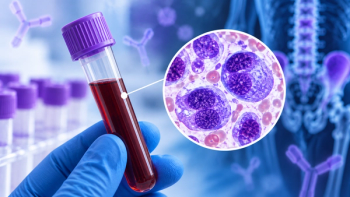
AI is becoming a growing part of cancer care. Learn how doctors are using it to navigate complex treatment decisions and support patients.
The FDA approved Guardant360 CDx as a companion diagnostic to identify patients with BRAF V600E-mutant metastatic colorectal cancer who may benefit from Braftovi with Erbitux and chemotherapy.
The U.S. Food and Drug Administration (FDA) has approved Guardant360 CDx as a companion diagnostic to identify patients with BRAF V600E-mutant metastatic colorectal cancer (mCRC) who may benefit from treatment with Braftovi (encorafenib) in combination with Erbitux (cetuximab) and chemotherapy, Guardant Health, Inc. announced in a news release.
This approval provides a non-invasive way to detect genetic alterations through a simple blood draw, ensuring that patients with cancer can be matched with targeted therapies more effectively, particularly when tumor tissue is unavailable, insufficient or when rapid initiation of therapy is clinically necessary.
The accelerated approval of this diagnostic tool is supported by data from the phase 3 BREAKWATER trial. This study evaluated Braftovi-based regimens in patients with BRAF-mutated metastatic colorectal cancer who had not been previously treated. The trial showed that treatment with the combination of Braftovi and Erbitux plus mFOLFOX6 chemotherapy significantly improved the objective response rate, which measures how many patients see a decrease in the size of their tumors.
Additionally, the study demonstrated significant improvements in progression-free survival and overall survival compared with standard care. These results underscore the importance of early genomic testing to guide targeted therapy for this high-risk patient population. Colorectal cancer is currently the second-leading cause of cancer-related deaths in the United States, and BRAF V600E mutations are present in approximately 8% to 10% of metastatic cases. This mutation is considered a molecularly distinct and aggressive subtype of the disease that typically has a poor prognosis and limited treatment options.
“This latest approval highlights the growing impact of liquid biopsy across advanced cancer care and underscores the utility of Guardant360 CDx in enabling precision therapy selection for patients with diverse, hard-to-treat tumors including aggressive colorectal cancer,” said Helmy Eltoukhy, Guardant Health chairman and co-CEO, in the news releaae.
The Phase 3 BREAKWATER trial focused on patients with BRAF-mutated metastatic colorectal cancer who had not received prior treatment. During the study, the Guardant360 CDx test enabled rapid circulating tumor DNA (ctDNA) analysis, which was used for treatment selection and to monitor for resistance to the therapy.
Key highlights from the trial included the demonstrated improvement in overall response rate, progression-free survival and overall survival for those treated with the combination of Braftovi, Erbitux and mFOLFOX6 chemotherapy. The study supports the use of early and comprehensive genomic profiling as a way to improve outcomes for patients with metastatic colorectal cancer.
The Guardant360 CDx is the first FDA-approved liquid biopsy for comprehensive genomic profiling. This latest approval marks the 25th companion diagnostic indication for the platform across multiple tumor types. It builds on previous approvals for therapies used in non-small cell lung cancer and breast cancer. The platform currently has broad coverage by Medicare and commercial payers, representing more than 300 million covered lives.
The FDA approval specifies that Guardant360 CDx should be used to identify patients for treatment with Braftovi in combination with Erbitux and chemotherapy in accordance with the approved product labeling. Because BRAF V600E-mutant metastatic colorectal cancer is an aggressive subtype, early identification of the mutation is critical to guiding patients to more effective, targeted therapies.
The use of a blood-based companion diagnostic offers a convenient and accessible method for detecting this actionable biomarker. This is particularly important for patient safety and care when tissue samples are unavailable or inadequate for testing. By using a simple blood draw to detect BRAF V600E and other relevant genetic alterations, clinicians can quickly identify eligible patients and make timely treatment decisions.
Editor's note: This article is for informational purposes only and is not a substitute for professional medical advice, as your own experience will be unique. Use this article to guide discussions with your oncologist. Content was generated with AI and reviewed by a human editor.
For more news on cancer updates, research and education,