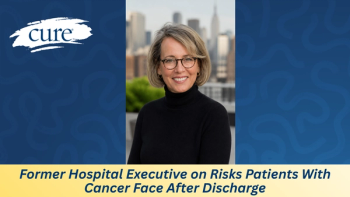
After 17 and a half years with metastatic primary peritoneal cancer, a former hospital executive explains how an AI health agent helped her after discharge.
Dr. Paul Oberstein discusses how personalized mRNA vaccines may improve long-term survival for patients with pancreatic cancer.
Pancreatic cancer remains one of the most difficult cancers to treat, with many patients facing a high risk of recurrence even after surgery and chemotherapy. Researchers are now exploring personalized mRNA vaccines designed specifically for each patient’s tumor in hopes of improving long-term outcomes.
Dr. Paul E. Oberstein is a medical oncologist and associate professor at NYU Grossman School of Medicine, where he serves as assistant director of the Pancreatic Cancer Center at NYU Langone’s Perlmutter Cancer Center. In an interview with CURE, Oberstein discussed how personalized pancreatic cancer vaccines work, why recent findings are generating excitement and what the future may hold for this area of cancer research.
Oberstein: Personalized vaccine means that they utilize the patient’s specific tumor in order to design the vaccine. Usually, that’s done during surgery when doctors can get a large section of the tumor. Then they utilize that tumor to design a vaccine specifically for that patient.
The goal is to identify areas in the tumor that might be very sensitive to the immune system, and those will be different for every person. Using computer and analytic technology, researchers try to predict which of those targets will be the most exciting or sensitive for the immune system, and then they put those into the vaccine.
Part of the idea behind any vaccine is that you’re giving something to the body that it will learn is an enemy, whether that’s a flu virus, hepatitis or something else. The body then develops memory immune cells that recognize that this thing is not good and will attack it.
The idea here is to identify things within the tumor that the body’s immune system will recognize as foreign or abnormal and then put those into the vaccine, which trains the immune system to target the tumor.
One of the difficulties with any vaccine is that you can give the same vaccine to several people, but not everyone is going to have the same immune response. In this relatively small study of about 16 patients, about half had a robust immune response to the vaccine that could be measured in their blood, and half did not.
That doesn’t necessarily mean the others had no response. It just means it wasn’t as robust, and we don’t exactly know why. Researchers are trying to refine the vaccine so that more people will have a strong immune response going forward.
One of the challenges of pancreatic cancer is that even patients who have surgery and chemotherapy — they do everything they’re supposed to do — but there’s still a high risk of the cancer coming back.
That’s why these results are exciting. If we can reduce that risk, it could make a significant difference for patients.
The key finding was that nine out of the 16 patients were still alive more than six years after starting the study, which is over 50%. That’s certainly higher than what we would expect from patients who undergo surgery and chemotherapy alone. Typically, maybe 20% to 30% of patients are alive at five years.
What was even more encouraging was that among the patients who responded strongly to the vaccine, almost all of them were still alive at six years. That survival rate was closer to 80% or 90%.
That’s what’s really exciting because it suggests the vaccine is actually doing something that’s contributing to those outcomes. Obviously, we want those numbers to be even higher, but it’s a very encouraging early signal.
That’s a hard question to answer because the vaccine is given along with chemotherapy and immunotherapy. Patients do get side effects, but we don’t know how much is coming from the chemotherapy alone, how much is from the immunotherapy and how much is from the vaccine itself.
That said, in this small study, the side effects appeared manageable overall, and there wasn’t anything shockingly different than what we would have expected. But again, this was only 16 patients, so larger ongoing studies will help answer those questions more clearly.
There are also still questions about timing — whether it’s best to give the vaccine after surgery, before chemotherapy, after chemotherapy or even in patients with more advanced disease. Those are things researchers are still trying to learn.
The future is hard to predict, but one of the remarkable things is that researchers were able to create this type of personalized vaccine at all. It’s a very complex process because it requires getting tumor tissue from the patient, analyzing it, developing a vaccine and then giving it back to the patient.
One of the biggest barriers moving forward is figuring out how long that process will take and whether this can eventually be applied broadly at cancer centers across the country and around the world.
The first step is making sure it truly helps patients. If larger randomized trials confirm that this vaccine improves outcomes, then it’s worth investing a tremendous amount to make it more widely available.
For more news on cancer updates, research and education,