Glossary
Glossary
Overall survival (OS): time from treatment start or diagnosis until death from any cause.
Progression-free survival (PFS): time a patient lives without the cancer growing or spreading.
IGV-001 improved survival for newly diagnosed glioblastoma in a phase 2b trial, with patients living a median 20.3 months and no serious safety issues.
A clinically meaningful improvement in overall survival was observed for patients with newly diagnosed glioblastoma treated with IGV-001 in a phase 2b clinical trial, according to a news release from Imvax.
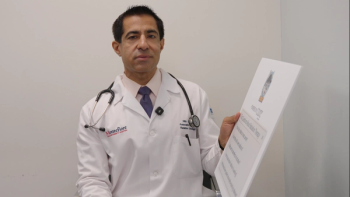
“The data from this trial are highly encouraging and suggest both a clinically meaningful improvement in overall survival for newly diagnosed glioblastoma patients and a benign safety profile for the therapy,” Dr. J. Bradley Elder, director, Neurosurgical Oncology, professor, Department of Neurological Surgery at The Ohio State University Wexner Medical Center and the highest enrolling investigator in the phase 2b trial, said in the news release. “These results represent a potential watershed moment for the treatment of this deadly disease.”
Patients who received IGV-001 in the trial had a median overall survival of 20.3 months, which was 6.3 months longer than the 14 months seen in the placebo group. The median follow-up for all patients was 22 months.
Glossary
Overall survival (OS): time from treatment start or diagnosis until death from any cause.
Progression-free survival (PFS): time a patient lives without the cancer growing or spreading.
No drug-related serious side effects were reported in the treatment group, and the safety profile in this phase 2b study was favorable and consistent with what was seen in an earlier phase 1b study that included 33 patients.
In total, about 100 patients with newly diagnosed glioblastoma have received IGV-001 across two clinical studies. In the trial, patients in the IGV-001 group experienced measurable benefit across several clinical measures compared with the placebo group. The company has told the Food and Drug Administration (FDA) that it plans to request a meeting to discuss the regulatory path for IGV-001.
“While treatments for many cancers have come a long way, treatments for glioblastoma have not changed much over the years. It is a heartbreaking diagnosis made even harder by how few treatment options there are,” Kelly Sitkin, president and CEO of the American Brain Tumor Association, said in the news release. “Ultimately, what any patient or family member wants is a chance at more time with loved ones, and new treatments for glioblastoma provide that hope for our community.”
The phase 2b trial was a randomized, multicenter, double-blind, placebo-controlled study designed to evaluate the safety and effectiveness of IGV-001 in people with newly diagnosed glioblastoma. The study looked at several outcomes, including progression-free survival as the primary endpoint, along with overall survival and safety.
The trial enrolled 99 participants across 19 sites in the United States. About 48 hours after the malignant tumor was removed during surgery, patients in the IGV-001 group were implanted with small chambers containing a mixture of their own whole tumor-derived cells and an antisense oligonucleotide. Patients in the placebo group received chambers with an inactive solution. In both groups, the chambers were removed after about 48 hours. Six weeks later, all patients received the standard treatment plan, which included concurrent radiation and temozolomide followed by maintenance temozolomide.
“Today marks a pivotal moment for both Imvax and for the people affected by newly diagnosed glioblastoma. For the past decade, the Imvax team has been dedicated to advancing the development of IGV-001, and the results from this Phase 2b study bring us meaningfully closer to achieving that goal. Thanks to the strong support of our investors, Imvax has the resources and expertise to execute on a clear strategy for IGV-001,” John P. Furey, executive chair of the Imvax Board of Directors, said in the news release. “We are preparing to meet with FDA to discuss the regulatory pathway for IGV-001 and what we believe is a strongly positive risk-benefit profile, especially given the large unmet medical need in newly diagnosed glioblastoma. Finally, we are profoundly grateful to the investigators, patients and their families for their commitment to this study.”
IGV-001 is an investigational therapy that combines a patient’s own cells with a device-based approach from Imvax’s Goldspire immuno-oncology platform. The goal is to prompt a broad and lasting immune response that targets solid tumors in a patient-specific way.
The FDA has granted IGV-001 both fast track and orphan drug designations for newly diagnosed glioblastoma. IGV-001 is still in clinical development and has not been approved by the FDA or any other regulatory authority.
Fast track designation is meant to speed up the development and review of treatments for serious conditions with unmet medical needs. Orphan drug designation is given to therapies for rare diseases and provides incentives to support their development.
For more news on cancer updates, research and education,