Learn how to cope with life after cancer treatment with Dr. Eric Bengtsen, a psycho-oncology psychiatrist at Memorial Sloan Kettering Cancer Center.
A USC study finds immunotherapy increases PAD risk by 60%. Experts advise vascular monitoring to help prevent limb loss in cancer survivors.
In the rapidly evolving landscape of oncology, immune checkpoint inhibitors (ICIs) have emerged as a revolutionary force, improving survival rates across a wide spectrum of malignancies. However, as these therapies become the standard of care, researchers are beginning to uncover a complex web of "off-target" effects. A landmark study led by experts at Keck Medicine of USC suggests that while these drugs are fighting tumors, they may also be associated with a significant increase in peripheral artery disease (PAD) and, in some cases, the risk of limb loss.
CURE recently sat down with two of the study’s authors, Dr. Tze-Woei Tan, a vascular surgeon and researcher, and Dr. David G. Armstrong, an expert in limb salvage, to discuss their findings that were published in the Journal of Vascular Surgery and what this means for the millions of survivors currently receiving these life-saving treatments.
The study utilized the TriNetX Analytics platform, a massive federated research database, to analyze more than 130,000 patients with cancer between 2005 and 2025. By comparing patients who received ICIs (such as PD-1, PD-L1 and CTLA-4 inhibitors) to a matched control group receiving other therapies, the team identified a startling trend.
Experts noted that ICI treatment was associated with a 59% to 64% increased risk of PAD, and the association remained consistent across all major classes of checkpoint inhibitors. For patients already considered at-risk, such as those with a history of smoking, diabetes, hypertension or high cholesterol, the stakes were even higher. In this subgroup, the use of ICIs was associated with an 85% increased risk of lower extremity amputation (LEA).
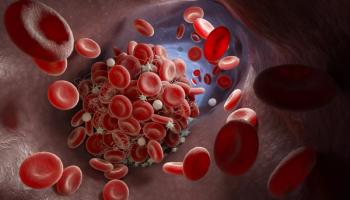
Peripheral artery disease occurs when the arteries that carry blood to the legs and feet become narrowed or blocked, usually due to a buildup of plaque (atherosclerosis). While the exact mechanism by which immunotherapy might accelerate this process is still being researched, experts believe that the same immune system activation that kills cancer cells may also trigger inflammation within the arterial walls.
The clinical takeaway for patients and care teams is clear: monitoring is key.
Patients should be on the lookout for symptoms of PAD, which can include:
The intent of this research is not to discourage the use of ICIs, which remain a primary tool in the armamentarium against cancer. Instead, it is about refinement. By identifying these risks early, doctors can implement preventive strategies, such as better management of blood pressure and cholesterol, to ensure that cancer survivors are not only living longer but are able to remain active and mobile.
For more news on cancer updates, research and education,