
News|Articles|January 17, 2026
Large Cell Lung Cancer Overview: What Patients Need to Know
Author(s)CURE staff
Fact checked by: Alex Biese, Spencer Feldman
Key Takeaways
- Large cell carcinoma is aggressive, requiring early detection through imaging and biopsy for optimal treatment outcomes.
- Treatment strategies vary by stage, including surgery, chemotherapy, radiation, targeted therapy, and immunotherapy.
Learn about large cell lung cancer, from diagnosis to stage-specific treatments, side effects and care options to guide patients through their journey.
Advertisement
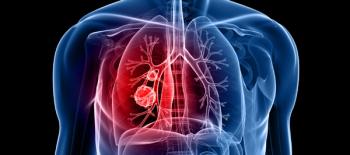
Large cell carcinoma is a type of non-small cell lung cancer that can grow and spread quickly. It often develops in the outer parts of the lungs. Symptoms may include persistent cough, chest pain, shortness of breath, unexplained weight loss or fatigue, though some patients have no symptoms at diagnosis. Early detection improves treatment options, making regular checkups and imaging important for those at risk.
How Large Cell Lung Cancer is Diagnosed
Diagnosis starts with imaging tests such as X-rays, CT scans or PET scans to locate abnormal areas in the lungs. A biopsy — through bronchoscopy, needle aspiration or surgery — confirms the cancer type. Molecular profiling can identify genetic mutations that guide targeted therapy. Doctors also evaluate overall health, lung function and staging through blood tests and scans to determine how far the cancer has spread.
Treatment Options and Side Effects for Large Cell Lung Cancer
Treatment depends on stage, overall health and tumor characteristics. Surgery, chemotherapy, radiation, targeted therapy and immunotherapy may be used alone or in combination. Common side effects include fatigue, nausea, hair loss, appetite changes, shortness of breath, skin changes and infection risk. Patients should discuss side effect management and supportive care with their oncology team.
Stage 1 Large Cell Lung Cancer Treatment
Frontline Treatment: Surgery and Adjuvant Therapy
Early-stage tumors are often removed surgically through lobectomy or segmentectomy. Adjuvant chemotherapy may follow to lower the risk of cancer returning.
Second-Line Treatment Options
If cancer recurs or surgery is not feasible, radiation therapy or systemic therapy may be used. Targeted therapy may be an option if genetic mutations are present.
Third-Line and Beyond: Clinical Trials and Symptom Management
Patients whose cancer progresses after initial treatments may consider clinical trials or immunotherapy. Palliative care focuses on symptom relief and quality of life.
Stage 2 Large Cell Lung Cancer Treatment
Frontline Treatment: Surgery with Chemotherapy
Stage 2 usually involves surgery to remove the tumor plus adjuvant chemotherapy to treat microscopic disease. Radiation may be added for tumors near critical structures.
Second-Line Therapy Options
If cancer returns, different chemotherapy regimens, targeted therapy, or immunotherapy may be recommended based on tumor testing.
Third-Line and Beyond: Advanced Treatment Strategies
Patients progressing after second-line therapy may explore clinical trials or supportive systemic treatments, with focus on symptom management.
Stage 3 Large Cell Lung Cancer Treatment
Frontline Treatment: Chemoradiation and Surgery
Combination chemotherapy and radiation is common. Surgery may be possible for select patients. Immunotherapy may follow chemoradiation in appropriate cases.
Second-Line Treatment Options
Immunotherapy or targeted therapy may be used if cancer progresses. Clinical trial enrollment is encouraged for eligible patients.
Third-Line and Beyond: Advanced Care and Symptom Relief
Further systemic therapy or supportive care helps manage disease progression. Quality of life remains a priority.
Metastatic Large Cell Lung Cancer Treatment
Frontline Treatment: Systemic Therapy for Advanced Disease
When cancer has spread, systemic therapy such as chemotherapy, immunotherapy or targeted therapy is standard. Palliative care addresses symptoms.
Second-Line Treatment Options
If frontline therapy is not effective, different systemic regimens or immunotherapy may be recommended based on prior response and side effect tolerance.
Third-Line and Beyond: Clinical Trials and Supportive Care
Patients progressing after multiple treatments may consider clinical trials or supportive care. Symptom management and function remain primary goals.
Living with Large Cell Lung Cancer: Key Takeaways
Large cell carcinoma can be aggressive, but treatment options have expanded with surgery, systemic therapy, immunotherapy and targeted treatments. Maintaining open communication with your oncology team is essential for understanding therapies, managing side effects and making informed decisions. Supportive care is central to preserving quality of life throughout the cancer journey.
Editor's note: This article is for informational purposes only and is not a substitute for professional medical advice, as your own experience will be unique. Use this article to guide discussions with your oncologist. Content was generated with AI, reviewed by a human editor, but not independently verified by a medical professional.
For more news on cancer updates, research and education,
Advertisement
Related Content
Advertisement

Advertisement
Advertisement
Trending on CURE
1
Top 3 Takeaways From WCLC 2026 That Patients Should Know
2
5 Years of Lung Cancer Advances: A Timeline of FDA Approvals and What They Mean for Patients
3
New Myeloma Combo Cuts Risk of Relapse by Up to 72% — Here's What It Could Mean for You
4
Why I Built a Garage Gym After Breast Cancer
5