
Those with a first-degree relative diagnosed with certain blood cancers may be at an increased risk for developing the disease themselves.

Kristie L. Kahl is vice president of content at MJH Life Sciences, overseeing CURE®, CancerNetwork®, the journal ONCOLOGY, Targeted Oncology, and Urology Times®. She has been with the company since November 2017.
She is a graduate of Rider University, where she acquired a Bachelors of Art in journalism, as well as a graduate of Temple University, where she received her Masters of Science in Sports Management.
Follow Kristie on Twitter at @KristieLKahl, or email her at kkahl@mjhlifesciences.com.
Those with a first-degree relative diagnosed with certain blood cancers may be at an increased risk for developing the disease themselves.

Given the hardships cancer can have on an individual and their loved ones, support groups can be a useful tool in navigating the new normal.

A registered dietician discussed the importance of maintaining one’s weight while going through treatment for mesothelioma.

From hereditary cancer risk among twins to study findings in squamous cell carcinoma, here’s what is making headlines in the cancer space this week.

Although survival among AYAs with cancer has improved over recent decades, disparities within the severity of stage, race/ethnicity and socioeconomic status are still just as prevalent.

In this week’s episode of the “CURE Talks Cancer” podcast, we spoke with Allyn Rose, the first woman who had undergone a mastectomy to be featured by Sports Illustrated, about her family history with cancer and her advocacy work with the AIRs Foundation.

The Food and Drug Administration’s approval of Keytruda in recurrent locally advanced or metastatic esophageal squamous cell carcinoma led to new progress for this patient population.

A slower walking pace among older adults with blood cancer can be a sign of frailty – which could be useful to know when tailoring one’s care to increase survival and lower hospitalizations.

The Food and Drug Administration approved Turalio to treat patients diagnosed with a group of rare, benign tumors.
In this week’s episode of the “CURE Talks Cancer” podcast, we spoke with a caregiver about support for others taking care of a loved one with cancer through a letter she wrote to her younger self.

Following the Food and Drug Administration’s approval of Nubeqa, men with non-metastatic castration-resistant prostate cancer now have an earlier more precise treatment option.
The Food and Drug Administration has approved Keytruda for recurrent locally advanced or metastatic squamous cell carcinoma of the esophagus in certain patients.
The Food and Drug Administration granted a priority review to Nubeqa for the treatment of men with non-metastatic castration-resistant prostate cancer.

Here is a list of the recent trial initiations that occurred within the cancer space in July.

CURE® spoke with one expert about the various treatment options and current clinical trials available to patients with mesothelioma, as well as what they have to look forward to in the future.

CURE spoke with one expert about mesothelioma symptoms that patients can be on the lookout for, as well as how to be knowledgeable about certain risk factors.
In this week’s episode of the “CURE Talks Cancer” podcast, we spoke with ex-NFL kicker Rolf Benirschke about being a grateful patient and how one can choose to be the victim or the victor in their diagnosis.

The Food and Drug Administration granted a priority review to a new drug application for the accelerated approval of tazemetostat to treat metastatic or locally advanced epithelioid sarcoma not eligible for curative surgery.
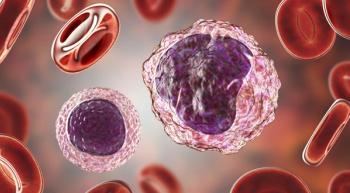
With the Food and Drug Administration’s approval of Ruxience, a biosimilar to Rituxan, patients with certain types of non-Hodgkin lymphoma and chronic lymphocytic leukemia may have improved access to a more affordable treatment option.
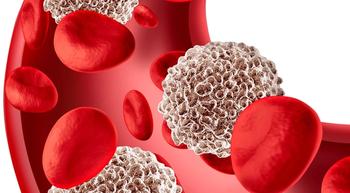
Treatment with fedratinib may lead to clinically meaningful responses among patients with myelofibrosis who were previously treated with Jakafi, according to an updated analysis of the phase 2 JAKARTA2 study.

Karen, who received her bladder cancer diagnosis in 2010, was faced with a similar challenge after her husband was diagnosed with the same disease just six years later.
In this week’s episode of the “CURE Talks Cancer” podcast, we spoke with a bladder cancer survivor turned caregiver about the advice she would give her newly-diagnosed self.

While half of women with gynecologic cancer reported experiencing significant fatigue during treatment, only 8% of survivors had symptoms regress without intervention.

Long-term survivors of pediatric neuroblastoma may be at an increased risk for neurocognitive impairment – in particular, due to age at diagnosis and the type of treatment received.

An oncology dietitian offered advice on how to improve appetite and eat healthy before, during and after treatment for gastrointestinal cancers.

A glioblastoma (GBM)-specific app, called OurBrainBank, efficiently collected patients’ symptoms – offering many hope for future research, according to founder Jessica Morris.
Cancer Blows, an event by The Ryan Anthony Foundation, offers hope for many with cancer – all while raising awareness for multiple myeloma.

Many patients wonder why their chemotherapy infusions take so long, so three health care professionals explained the process from start to finish.
In this week’s episode of “CURE Talks Cancer,” we spoke with a melanoma survivor who wishes she knew at diagnosis what her cancer journey would do for her – not to her.

In assessing the quality of family cancer history entered into electronic health records, researchers found that such reporting was suboptimal – highlighting the need to optimize online collection with a provider-free approach.