First-line treatment with Opdivo plus low-dose Yervoy improved survival among patients with advanced NSCLC compared to chemotherapy, according to results from the CheckMate-227 trial.

Kristie L. Kahl is vice president of content at MJH Life Sciences, overseeing CURE®, CancerNetwork®, the journal ONCOLOGY, Targeted Oncology, and Urology Times®. She has been with the company since November 2017.
She is a graduate of Rider University, where she acquired a Bachelors of Art in journalism, as well as a graduate of Temple University, where she received her Masters of Science in Sports Management.
Follow Kristie on Twitter at @KristieLKahl, or email her at kkahl@mjhlifesciences.com.
First-line treatment with Opdivo plus low-dose Yervoy improved survival among patients with advanced NSCLC compared to chemotherapy, according to results from the CheckMate-227 trial.

The addition of Lynparza to maintenance therapy with Avastin improved time to disease progression in women with advanced ovarian cancer, according results of the PAOLA-1/ENGOT-ov25 trial.

Morever, the next-generation androgen receptor improved overall survival, compared with placebo, in patients with nonmetastatic castration-resistant prostate cancer, according to updated findings of the phase 3 SPARTAN trial.

The Food and Drug Administration expanded its approval of Cologuard, an at-home non-invasive colorectal cancer screening test, to include use among average-risk individuals aged 45 and older.

Here is a list of the recent trial initiations that occurred within the cancer space in September.

A recent survey found that lung cancer stigma can be a barrier to treatment; however, on the plus side, the percentage of people who associate the disease with smoking has dropped in recent years.

CURE spoke with an expert from Mount Sinai to discuss the future of ovarian cancer treatment and his advice for women facing a new diagnosis.

A subgroup of women with advanced endometrial cancer now have a second-line treatment option to turn to after progressing on chemotherapy.
Men with castration-sensitive prostate cancer now have an option for when treatment with androgen deprivation therapy alone is not enough.

Dana Vaughns and his colleagues rode 3,000 miles across the U.S. in support of funding research for the V Foundation.
A recent survey showed that most Americans do not know what cutaneous squamous cell carcinoma is and how severe the disease can be if it advances.
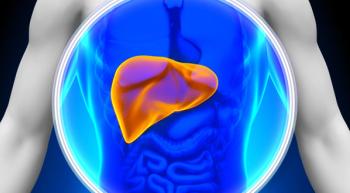
Researchers at Roswell Park Comprehensive Cancer Center found a biomarker that may help to determine which patients with hepatocellular carcinoma will respond to treatment with Nexavar, leading to more individualized treatment options.

Twist Out Cancer has paired those touched by cancer with an artist, who creates a unique piece of artwork that reflects on their individual journey with cancer.

In this week’s episode of the “CURE Talks Cancer” podcast, we spoke with a skin cancer survivor who has dealt with many recurrences over the last 30 years and tells others to “listen to your mother” and protect your skin from the sun.
One expert discusses the current treatment options for patients with mantle cell lymphoma as well as the potential shift away from chemotherapy in the future.
In this episode of the “CURE Talks Cancer” podcast, we spoke with Brilliantly founder Kristen Carbone about her family risk for cancer and why she started her site to broaden the scope of breast cancer navigation.

The Food and Drug Administration issued guidelines to hopefully broaden clinical trial criteria for breast cancer studies to include men.
In this episode of the “CURE Talks Cancer” podcast, we spoke with Matt Newman, who was diagnosed with brain cancer at 39, but refuses to let cancer define the legacy he has made.

CURE spoke with Ryan Anthony, a Dallas Symphony trumpet player, about how his passion for music led to his myeloma diagnosis and the start of his foundation CancerBlows.

The American Lung Association’s chief medical officer discusses e-cigarette use and answers common questions surrounding this increasing epidemic.
Here is a list of the recent trial initiations that occurred within the cancer space in August.

The US Preventive Services Task Force now recommends for genetic counseling and testing for survivors of certain cancer types, but many at high-risk for the disease are left off the list.

CURE spoke with an expert to discuss financial toxicity and the important of seeking support after receiving a cancer diagnosis.

From celebrity news to a new partnership aimed to help patients and their caregivers, here’s what is making headlines in the cancer space this week.
In this episode of the “CURE Talks Cancer” podcast, we spoke with Jason Mendelsohn, a stage 4 HPV-related throat cancer survivor who created a web site geared to raising awareness about HPV-related cancers.

Patients whose cancers have the NTRK gene fusion as well as those with ROS1-positive non-small cell lung cancer now have a second targeted therapy as a treatment option.

After almost a decade with no new treatments, Inrebic offers patients with myelofibrosis new hope for the future.

Following its announcement of covering chimeric antigen receptor-T cell therapy nationwide, the Centers for Medicare and Medicaid Services has now made this highly-priced, but life-saving, treatment available to many who would not otherwise have access to it at their cancer centers.

The Food and Drug Administration approved Inrebic as the first new treatment in nearly a decade for patients with myelofibrosis.
In this week’s episode of the “CURE Talks Cancer” podcast, we spoke with a melanoma survivor about the importance of community and human connection to build hope after a cancer diagnosis.