
In this week’s episode, we spoke with wife, mother, comedian and colon cancer survivor Heather Tolley-Bauer about finding comedy as an outlet to her diagnosis.

Kristie L. Kahl is vice president of content at MJH Life Sciences, overseeing CURE®, CancerNetwork®, the journal ONCOLOGY, Targeted Oncology, and Urology Times®. She has been with the company since November 2017.
She is a graduate of Rider University, where she acquired a Bachelors of Art in journalism, as well as a graduate of Temple University, where she received her Masters of Science in Sports Management.
Follow Kristie on Twitter at @KristieLKahl, or email her at kkahl@mjhlifesciences.com.
In this week’s episode, we spoke with wife, mother, comedian and colon cancer survivor Heather Tolley-Bauer about finding comedy as an outlet to her diagnosis.
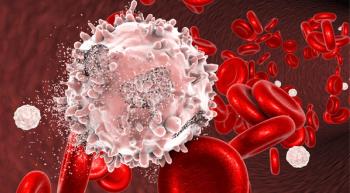
An expert discusses new treatment options for patients diagnosed with CLL.

Patients with previously treated, advanced NSCLC who received Opdivo therapy experienced a survival benefit over many years, according to a pooled analysis of four studies.

Patients with relapsed or refractory chronic lymphocytic leukemia may have more options now than ever before, according to William G. Wierda, M.D., Ph.D.
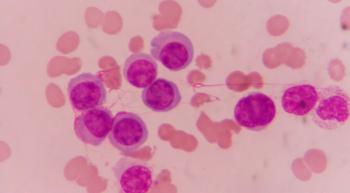
While novel agents continue to evolve in the treatment landscape for chronic lymphocytic leukemia, many may start to be combined in the front-line setting as well, according to Matthew S. Davids, M.D., MMSc.
This week, we spoke with all three of CURE’s 2019 Ovarian Cancer Heroes: Ryan Mitstifer Walton, Paula Anastasia, RN, MN, AOCN, and Shannon Westin, M.D., M.P.H.

Barriers to treatment can be an uphill battle for patients with cancer; however, one company is here to help.

Enormous progress has been made in breast cancer, yet many challenges remain, according to Ann H. Partridge, M.D., MPH.

Administration of Opdivo (nivolumab) before surgical resection in patients with glioblastoma appeared safe and feasible, according to phase 2 trial results published in Nature Medicine.

The Food and Drug Administration (FDA) Expanded Access program appeared to have broad use, involved a wide variety of patients and drugs, and derived clinical benefit, according to an initial summary published in JAMA Oncology.
In this week’s episode, we spoke with the most decorated Olympic gymnast and ovarian cancer survivor Shannon Miller before CURE’s second annual Ovarian Cancer Heroes gala.

Lenvima (lenvatinib) in combination with weekly paclitaxel induced activity among those with recurrent endometrial and platinum-resistant epithelial ovarian cancer, according to results from a phase I study.

Treatment with the combination of Keytruda (pembrolizumab), Avastin (bevacizumab) and metronomic cyclophosphamide appeared safe and effective in women with recurrent epithelial ovarian cancer, according to results from an open-label phase 2 study.

Prior exposure to PARP inhibitor treatment may not lead to resistance in future use with these agents in women with recurrent epithelial ovarian cancer, meaning repeat use could become more common.

Side effects decreased among patients with high-risk ovarian cancer who received an individualized starting dose of Zejula (niraparib), based upon baseline bodyweight and platelet counts, compared with a fixed starting dose.

Patients with recurrent ovarian cancer who received Zejula (niraparib) maintenance therapy experienced longer progression-free survival, as well as more time without symptoms or toxicity compared with placebo, according to results from the phase 3 ENGOT-OV16/NOVA trial.

With the evolving landscape of maintenance therapies to treat patients with lymphoma following auto-HCT, a panel consensus recommended four grade A options for physicians to utilize.
In this week’s episode, we spoke with Linda Tantawi about Susan G. Komen Greater New York City, and how the organization is connecting communities to educate women about breast cancer.

A cancer gene panel using blood may be a cost-effective way of testing the quantity of mutations found in tumors of patients with non-small cell lung cancer.

At the 2019 Genitourinary Cancers Symposium, Arjun V. Balar discussed the past, present and future of immunotherapy for the treatment of bladder cancer.

At CURE’s patient-focused meeting at the 36th Annual Miami Breast Cancer Conference, Shannon Pulaski and Ellen Matloff discussed the importance of genetic counseling and learning more about one’s family health history.

The Food and Drug Administration approved the VENTANA PD-L1 (SP142) Assay as the first companion diagnostic to aid in identifying patients with triple-negative breast cancer who are eligible for treatment with Tecentriq (atezolizumab) plus chemotherapy.
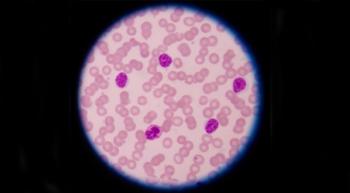
Time-limited treatment could be the new wave of research in the treatment of chronic lymphocytic leukemia (CLL), according to Nicole Lamanna, M.D.
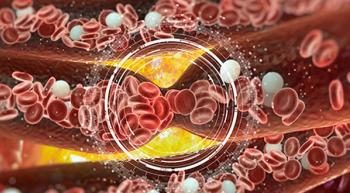
The oral blood thinner Xarelto (rivaroxaban) significantly reduced blood clots for high-risk patients with cancer being treated in the outpatient setting, according to results from the CASSINI trial.
In this week’s episode, we spoke with a patient advocate and survivor of renal cell carcinoma to help raise awareness during Kidney Cancer Awareness month.

Sameek Roychowdhury, M.D., Ph.D., discusses the importance of molecular testing to determine treatment options for cholangiocarcinoma.

Frontline use of Bavencio (avelumab) plus Inlyta (axitinib) significantly improved progression-free survival compared with the standard of care in patients with advanced renal cell carcinoma.

The one-day agenda hosts faculty and panels discussing breast cancer treatments and their side effects, genetics, survivorship, and more.
In this week’s episode, we spoke with actor Scott Foley, who opened up about his experience as a caregiver to his mother after her ovarian cancer diagnosis and why he joined the Not on My Watch movement to help educate others.

A liquid biopsy test detected all of the guideline-recommended biomarkers in newly diagnosed patients with metastatic non-small cell lung cancer at a similar rate but faster than tissue genotyping.