
Dr. Brian Rini discussed the benefits of treating patients with relapsed or refractory renal cell carcinoma with the vascular endothelial growth factor tyrosine kinase inhibitor.

Kristie L. Kahl is vice president of content at MJH Life Sciences, overseeing CURE®, CancerNetwork®, the journal ONCOLOGY, Targeted Oncology, and Urology Times®. She has been with the company since November 2017.
She is a graduate of Rider University, where she acquired a Bachelors of Art in journalism, as well as a graduate of Temple University, where she received her Masters of Science in Sports Management.
Follow Kristie on Twitter at @KristieLKahl, or email her at kkahl@mjhlifesciences.com.
Dr. Brian Rini discussed the benefits of treating patients with relapsed or refractory renal cell carcinoma with the vascular endothelial growth factor tyrosine kinase inhibitor.

The Food and Drug Administration approved the first new treatment option for Kaposi sarcoma in more than 20 years.

Researchers showed that integration of a comprehensive geriatric assessment with geriatrician-led management care improved quality of life for older adults with cancer.

Treatment with Lynparza in the maintenance setting extended overall survival by more than a year in women with platinum-sensitive relapsed ovarian cancer with BRCA1/2 mutations.
The Food and Drug Administration approved the first therapy to treat cancers with rearranged during transfection, or RET, gene alterations.

In this week’s episode of the “CURE Talks Cancer” podcast, we spoke with ESPN broadcaster Dick Vitale on his passion as a longtime champion to achieve victory over cancer.
In this episode of the “CURE Talks Cancer” podcast, an expert discusses the different types of skin cancer and how individuals can be proactive about screening.
The Food and Drug Administration approved Pemazyre for the treatment of patients with previously treated, advanced cholangiocarcinoma.
In this special edition of the “CURE Talks Cancer” podcast, we teamed up with our sister publication “OncLive on Air” to speak with a patient-doctor duo on myeloproliferative neoplasms.
The Food and Drug Administration approved the combination use of Braftovi plus Erbitux for the treatment of adult patients with metastatic colorectal cancer with a BRAF V600E mutation.

The Food and Drug Administration approved the first and only erythroid maturation agent to treat patients with MDS who require red blood cell transfusions and have failed an erythropoiesis stimulating agent.
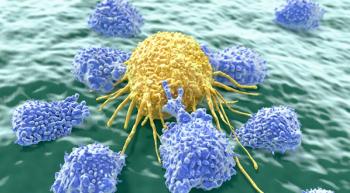
Patients with relapsed or refractory CD19-positive cancers experienced complete responses with no major side effects following treatment with CAR-NK cell therapy.
In this episode of the “CURE Talks Cancer” podcast, we spoke with Dr. Angela Nicholas about her journey as a caregiver to her husband, who was diagnosed with colorectal cancer at 45, and why earlier screening is so vital.

Small cell lung cancer often becomes resistant to chemotherapy, and recent research highlights that these cells evolve, explaining why patients require further lines of treatment.
In this episode of the “CURE Talks Cancer” podcast, we spoke with Aki Smith, founder of Hope for Stomach Cancer, about her journey as her father’s caregiver and what she hopes the organization offers for others affected by a stomach cancer diagnosis.

Jeffrey Glen Jones – an American illustrator who started doing comic books about 25 years ago – is using his creative talents to illustrate the stories of those impacted by MPNs, as part of a campaign called Rare Reflections: MPNs Unmasked.

At the 37th Annual Miami Breast Cancer Conference, Dr. Valerie Lemaine discussed the signs and symptoms of BIA-ALCL, as well as how the disease is diagnosed and treated.

At CURE’s Educated Patient Breast Cancer Summit, Stephanie Seban shared the ways a patient can become their own best advocate to thrive through their breast cancer journey.

“A person becomes a survivor from the point they are diagnosed and for the balance of their lives,” Dr. Don S. Dizon said in a presentation at the 37th Annual Miami Breast Cancer Conference®.

At the 37th Annual Miami Breast Cancer Conference, Dr. Kevin S. Hughes discussed genetic testing and what health care providers should be doing to identify more individuals at risk for cancer.

Xentuzumab in combination with Verzenio, with or without endocrine therapy, may be safe and effective in treating patients with solid tumors and advanced breast cancer.

Premenopausal women with HR-positive, HER2-negative advanced breast cancer experienced improved survival and quality of life with the addition of Kisqali to Zoladex and endocrine therapy to their treatment regimen.

Women who had contralateral prophylactic mastectomy reported similar breast satisfaction and quality of life, cancer-related distress and anxiety and depression scores, compared with those who did not undergo the procedure.
In this episode of the “CURE Talks Cancer” podcast, we spoke with the co-chair of the MMRF’s Laugh for Life event, as well as this year’s “Spirit of Hope” award recipient.

Here is a list of the recent trial initiations that occurred within the cancer space in February.
In this episode of the “CURE Talks Cancer” podcast, we spoke with Andrew Ciupek, from the Go2 Foundation for Lung Cancer, on the importance of biomarker testing and targeted therapy options for patients with non-small cell lung cancer.

MK-6482 demonstrated an objective response rate of 24% among patients with advanced clear cell renal cell carcinoma, according to study findings presented at the 2020 Genitourinary Cancers Symposium.
The Food and Drug Administration granted a priority review to the new drug application for lurbinectedin to treat patients with small cell lung cancer.

After five years of follow-up, treatment with Opdivo in those with previously treated advanced or metastatic renal cell carcinoma induced superior survival outcomes.
More than 50% of patients with previously untreated advanced or metastatic renal cell carcinoma were alive at 42 months after being treated with Opdivo plus Yervoy.