
Watch the full documentary about the Moving Mountains for Multiple Myeloma Machu Picchu climb.
Watch the full documentary about the Moving Mountains for Multiple Myeloma Machu Picchu climb.

The Moving Mountains for Multiple Myeloma (MM4MM) team completed another amazing hike to raise money for the Multiple Myeloma Research Foundation (MMRF).
The Moving Mountains for Multiple Myeloma (MM4MM) team completed another amazing hike to raise money for the Multiple Myeloma Research Foundation (MMRF).
Raghav Sundar, M.B.B.S., M.R.C.P., M.Med., National University Health System in Singapore, discusses the possibility of cooling limbs during chemotherapy infusions to prevent chemotherapy-induced peripheral neuropathy. In a clinical trail of patients with breast cancer, this device showed proof of concept.
Winson Cheung, M.D., medical oncologist at the British Columbia Cancer Agency in Vancouver, discusses the importance of discussing any immunotherapy-related side effects with health care providers.
Matthew Galsky, M.D., professor of Medicine at the Icahn School of Medicine at Mount Sinai, discusses the different stages and curability of bladder cancer.
Mark G. Malkin, M.D., professor of Neurology at the Virginia Commonwealth University, discusses the possibility of using viruses to treat glioblastoma.
Yuhong Dong, M.D., PhD, clinical researcher at Novartis, discusses the benefits of Falun Gong, a Chinese mind-body practice, for patients with cancer.
Nathalie LeVasseur, fellow at the Ottawa Hospital Cancer Centre, discusses diet in breast cancer survivors.
For years, Eric Gelber has been embarking on long distance runs to raise money for the Multiple Myeloma Research Foundation. This September, he will attempt his longest run yet: 200 miles through Central Park over the course of a weekend
Ishwaria Mohan Subbiah, a physician at the MD Anderson Cancer Center, discusses elderly people on clinical trials.
Supriya Mohile, director of the Geriatric Oncology clinic at the University of Rochester Wilmot Cancer Institute, explains that when geriatric patients visit their doctors and oncologists, it is important to express their worries and any side effects that they are experiencing.
Yvonne Saenger, director of melanoma and immunotherapy at Columbia University Medical Center, discusses the side effects patients should look out for when they are on immunotherapy, and how to determine if they are experiencing normal therapy-induced fatigue or if they are suffering from a hormone reaction and should go see their medical team.
Ricardo J. Bello, postdoctoral research fellow at Johns Hopkins School of Medicine, discusses the importance of patient education to drive the decision-making process in breast reconstruction and surgery. With more knowledge, they can ask higher level questions and help the field thrive.
Luke Peppone, assistant professor at the University of Rochester Medical Center, discusses the surprising benefits soybean oil had for patients with breast cancer.
Halle Moore, medical oncologist at the Cleveland Clinic, discusses fatigue in breast cancer survivors.
Ronald Natale, medical oncologist at Cedars-Sinai Medical Center, discusses treatment options for patients with EGFR-mutated lung cancer.
Karuppiah Kannan, associate director at Takeda Pharmaceuticals, talks about the progress made in treating myeloma and where the field is going in the future.
Claire Friedman, Memorial Sloan Kettering Cancer Center, discusses some of the factors that doctors and elderly patients with melanoma should discuss before deciding on a treatment plan with immunotherapy. Immunotherapy is not one-size-fits all, and patients should be informed of the pros and cons of each option.
Janet Freeman-Daily, patient advocate and CURE contributor, discusses some key points that patients should know about enrolling in clinical trials.
Karuppiah Kannan, associate director at Takeda Pharmaceuticals, discusses what it was like as a researcher to meet with patients during the Moving Mountains for Multiple Myeloma Grand Canyon hike.
Kelly Kenzik, epidemiologist at the University of Alabama at Birmingham School of Medicine, discusses racial disparities between African American and white women with breast cancer.
Barbara Van Husen, president of the MPN Research Foundation, discusses how after the discovery of the JAK2 mutation in 2005, MPN research and treatment advances proliferated. Now, Van Husen says, it is one of the most active areas of hematological research
Moaath K. Mustafa Ali, Cleveland Clinic, discusses the effects of smoking on breast cancer survivorship.
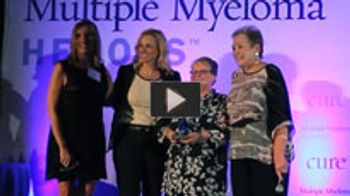
We were honored to present an annual evening of celebration and appreciation for the heroes that have made a difference in the lives of individuals living with multiple myeloma.

Throughout the year, CURE puts on several events to honor heroes that have made a difference in the lives of patients and survivors of cancer.
Emily Johnston, hematology/oncology fellow at the Lucile Packard Children's Hospital Stanford, discusses intensity of end-of-life care for the adolescent and young adult (AYA) cancer population.
Charles Kamen, assistant professor at the University of Rochester Medical Center discusses how exercise can be used to decrease depression and even reduce health disparities between heterosexual and LGBT patients.
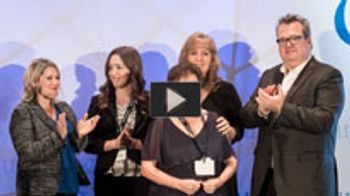
Each year, CURE magazine gives readers a unique opportunity to honor an oncology nurse through the Extraordinary Healer Award for Oncology Nursing.
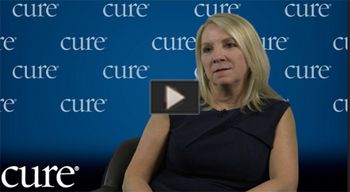
Beth DuPree, MD, FACS, ABIHM, medical director of Integrative Medicine and Wellness and vice president of Holy Redeemer Health System, adjunct assistant professor of Surgery at the University of Pennsylvania, discusses what patients need to know the day they are diagnosed with breast cancer.