
Two-time cancer survivor seven years out from her first diagnosis shares how she copes with her cancer "worry brain."
Two-time cancer survivor seven years out from her first diagnosis shares how she copes with her cancer "worry brain."
World Cancer Day is approaching. Join us on Monday's #CureConnect tweet chat to discuss how cancer has impacted your life.

For years, former Vice President Joe Biden’s son, Beau, was stationed near large, potentially toxic burn pits. After Beau died of glioblastoma (GBM) in May 2015, Joe Biden grew skeptical and started to question if the burn pits contributed to his son’s cancer diagnosis.
Resilience is an important quality to possess as you're fighting breast cancer. Learn more about how it can positively affect your journey.
Deciding on a cancer treatment plan could be the most important decision a survivor makes.
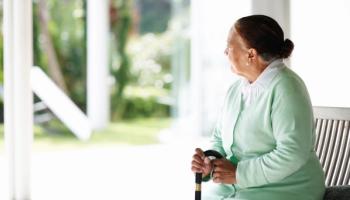
Additional physical and mental components may seriously affect health-related quality of life in older patients with cancer.
Who wears the face of cancer, and how can we spot them? In this thought-provoking article, one survivor shares her perspective.

For many cancer survivors, returning to work can be both exciting and anxiety-inducing. Knowing your rights and making a plan can help ensure a smooth transition.
Two-time cancer survivor encourages newly diagnosed patients to keep hope.
A little focus on intentions for the week can help fight off cancer blues and allow more time for taking care of yourself.
Two-time cancer survivor discusses the art of waiting, be it for treatments, rechecks or test results.
It's sometimes easy to think that our bodies have failed us, but we need all the help we can get.
Knowing that my sister gained remission gives me an immense bias, but ask the question, “Good or bad?” now and my answer may just be, “hard to tell.”
Many people don't realize they are putting pressure on those walking though cancer to keep a good attitude. There are days we all need to be able to acknowledge that it can be difficult.

January is Cervical Health Awareness Month. Learn how women with cervical cancer can manage potential fertility concerns.
A recurrence is always a possibility for any victim of cancer, but should survivors expect a recurrence? If so, how can they prepare for that possibility?
A male breast cancer survivor offers some alternatives to stress.
"Breathe in God, breathe out cancer," I prayed with as much conviction as I could muster.
With wit and wisdom, Carolyn Choate recounts the resilience of cancer survivors everywhere to outwit the enemy within.

Parts of the Northeast had a foot or more of snow last week. What should patients do when their scheduled cancer treatment falls in the middle of a snow storm?
In the movie, Charlie Brown was asked what his New Year’s resolution was. With typical candor, he answered that instead of dreading the whole year he was dreading only one day at a time.
You wouldn't keep an annoying friend around. Think of fear the same way.
Any thought about the future was initially difficult to manage, but I soon realized I was not going to waste any time I had left in my life and made it a mission to enjoy life with greater depth.
Breast cancer survivor shares her dance on the risk continuum of the chemicals in our lives.
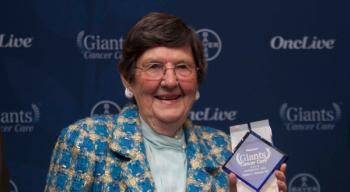
Holland, who worked until the end of her life in the field she was largely responsible for founding, had served, since 1989, as the Wayne E. Chapman Chair in Psychiatric Oncology at Memorial Sloan Kettering Cancer Center (MSK), in New York.
Don't be ashamed that you haven't "moved on," says this metastatic breast cancer patient.
Breast cancer and melanoma survivor reflects about being tired of her cancers and shares a way to respond to uncertainty.
"Getting on" with life after a spouse dies is not easy. Forgiving cancer for its domino effect is even harder.
Life-saving medical care can leave scars that don't show on the outside, but last a lifetime.
Some cancer survivors are good at getting on with life. Some of us remain timid about the prospect of life, even when a prognosis is good. A new year is a good time to try harder to seize the day, whatever the future is likely to bring.