








The phase 3 FLAMES trial showed a benefit of progression-free survival with senaparib compared to placebo in patients with newly diagnosed, advanced ovarian cancer.
The phase 3 FLAMES trial showed a benefit of progression-free survival with senaparib compared to placebo in patients with newly diagnosed, advanced ovarian cancer.

Some patients with breast cancer who took Verzenio plus endocrine therapy two years after initial treatment demonstrated improved efficacy.

Patients with previously treated small cell lung cancer who received a 10-mg dose of tarlatamab had improved responses with no new safety signals.

Sometimes you just need to be present, whether that means being in the room or a phone call away.

As Susan Sullivan discussed her lung cancer diagnosis and the FDA discusses banning specific hair straightening products due to long-term health effects, here’s what’s happening in the oncology space this week.


B42-001, a novel CAR-T cell therapy, will be tested in a phase 1 trial for the treatment of patients with BT-001—positive solid cancers.

An expert explains the recent movement towards the use of immunotherapy for patients with resectable NSCLC.

Following the recent FDA approval of Braftovi with Mektovi for some patients with NSCLC and a BRAF V600E mutation, a lung cancer expert explains the science behind the news.

My 5-year mark prompted me to reflect on my entire experience…and how far I have come.

Sally Joy Wolf, who has metastatic breast cancer, tells CURE about how some patients can feel adrift during the annual October “sea of pink.”

After receiving two cancer diagnoses, I became more vigilant about my health — especially during the COVID-19 pandemic.

After multiple cancer surgeries, I'm now more confident than I was when I was living on "easy street."

A phase 1 trial is being conducted to evaluate the combination of PT886 and Keytruda in patients with claudin 18.2 positive gastric or gastroesophageal junction (GEJ) adenocarcinomas.

The benefit of neurofeedback by a closed-loop brain-computer interface was prominent when treating chemotherapy-induced peripheral neuropathy in patients with breast cancer.

Being there for someone who is in need does more than you think.

“When people see me, they just feel like they have to start jogging,” as one chief nurse practitioner tells CURE when discussing how patients with MPNs can reduce their risk of cardiovascular and thrombotic events.
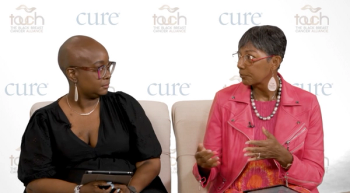
In this on-demand webinar series, CURE partnered with TOUCH, The Black Breast Cancer Alliance to discuss ways patients can be empowered to receive the best care possible.
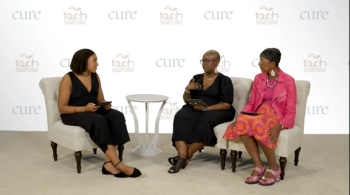
this on-demand webinar series, CURE partnered with TOUCH, The Black Breast Cancer Alliance to negate common clinical trial misperceptions.
In this on-demand webinar series, CURE partnered with TOUCH, The Black Breast Cancer Alliance to discuss how women of color with breast cancer can learn more about their disease.
In this on-demand webinar series, CURE partnered with TOUCH, The Black Breast Cancer Alliance to discuss low clinical trial participation in Black patients with breast cancer, and factors that may be contributing.
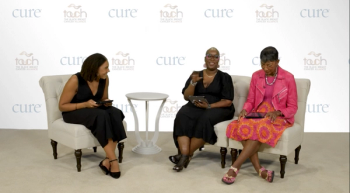
In this on-demand webinar series, CURE partnered with TOUCH, The Black Breast Cancer Alliance to discuss racial disparities in breast cancer.

Researchers found that non-White patients with gastrointestinal cancers, particularly those living in areas with persistent poverty, face inequities in access to and dosage of opioids for end-of-life pain relief.

Patients with cancer and diabetes need to carefully co-manage both diseases, as one expert tells CURE.

There were so many opinions on my healing after cancer.

Patients with intermediate- or poor-risk clear-cell metastatic renal cell carcinoma saw improved response rates with Opdivo with or without Yervoy.

Two decades ago, I received a stage 4 lymphoma diagnosis, and since then, I’ve learned that life goes on — even with cancer.
The Food and Drug Administration approved a Keytruda regimen to be administered before and after surgery for patients with stage 2, 3A or 3B non-small cell lung cancer.

The FDA will speed up its review of Tagrisso plus chemotherapy for patients with advanced or metastatic EGFR-mutant non-small cell lung cancer after the regimen led to improved outcomes in a phase 3 trial.
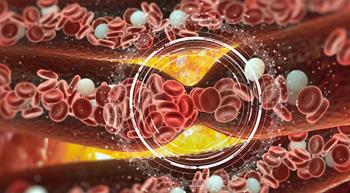
One expert explained how patients with breast cancer have an increased risk for blood clots, even though one recently published survey determined that not many patients are aware of this.