




As a part of its “Speaking Out” video series, on behalf of FORCE, CURE® spoke with Diane Rose, their vice president of volunteer programs about the importance of support for those affected by hereditary cancers.
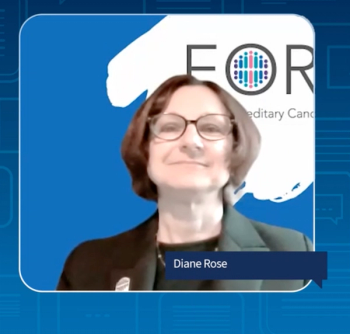
As a part of its “Speaking Out” video series, on behalf of FORCE, CURE® spoke with Diane Rose, their vice president of volunteer programs about the importance of support for those affected by hereditary cancers.

As a part of its “Speaking Out” video series, CURE® spoke with genetic counselor, Angela Trepanier, on behalf of FORCE, about disparities seen in genetic testing for caner.
As a part of its “Speaking Out” video series, on behalf of FORCE, CURE® spoke with Diane Rose, their vice president of volunteer programs, about how advocacy partnerships can bring greater awareness and education to patients with cancer and their families.
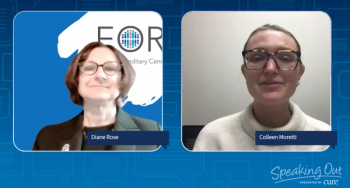
As a part of its “Speaking Out” video series, on behalf of FORCE, CURE® spoke with Diane Rose, their vice president of volunteer programs, about clinical trials for patients with hereditary cancers and those who have a risk of developing.

When children with cancer received dexrazoxane alongside their chemotherapy, they tended to have fewer heart complications in the short and long term.

Guidelines often use a cutoff of 70 years old for breast cancer treatment, but patients should discuss goals of care with their team to further personalize their care.

When I started cancer treatment, I had been cast in some sci-fi flick without prior consent.

The Food and Drug Administration granted an investigational new drug application and green lit the continued study of GC012F for the treatment of patients with relapsed/refractory myeloma.

The new year brings reflection on living fully with cancer.
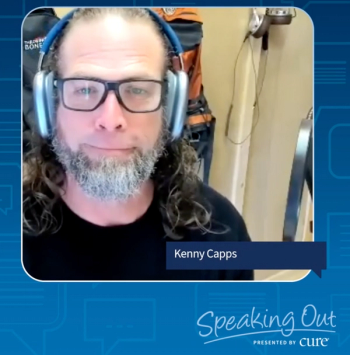
As a part of its Speaking Out Video series, CURE® spoke with Kenny Capps, from Throwing Bones for a Cure, about the importance of staying active during a multiple myeloma diagnosis.
As a part of its Speaking Out Video series, CURE® spoke with Kenny Capps, from Throwing Bones for a Cure, about the impact multiple myeloma has on a patient’s mental health and what they can do to help themselves.
As a part of its Speaking Out Video series, CURE® spoke with Dr. Saad Usmani, on behalf of Throwing Bones for a Cure, about the future of multiple myeloma treatments.
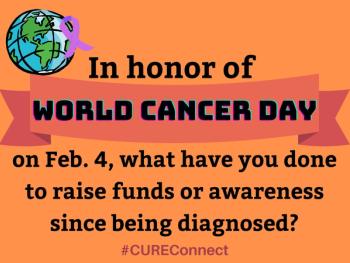
In honor of World Cancer Day, we asked our readers what they do to raise funds and awareness since being diagnosed.

I recently reflected on the most difficult decision I faced during my experience with cancer.

Findings from the phase 3 NRG-GY018 trial found that the addition of Keytruda to standard chemotherapy improved progression-free survival in patients with stage 3 to 4 or recurrent endometrial cancer.

From funding updates on the Cancer Moonshot to Howie Rose’s bladder cancer diagnosis and more, here’s what’s happening in the oncology space this week.

Reflecting on World Cancer Day got me thinking about butterflies, a symbol of hope, but, according to the “Butterfly Effect” theory, a small flap of their wings could have major impacts on the world, which is not very different from cancer.

The Food and Drug Administration approved Trodelvy for patients with pretreated, unresectable HR-positive, HER2-negative metastatic breast cancer.

If approved by the FDA later this year, momelotinib could fulfill an area of unmet need for patients with myelofibrosis, according to an expert.

Patients with breast cancer who lived in Southern states with Medicaid expansion were less likely to be diagnosed with metastatic disease and more likely to receive treatment.

Since 2015, the use of immunotherapies has increased for both young and older patients, but the survival benefit is more evident in younger patients, findings demonstrated.

Many men — my former self included — can be stubborn when it comes to cancer screenings or visiting the doctor. Thankfully I’ve changed my ways, which saved my life.

In this episode of the “Cancer Horizons” podcast, “Rabbi G” discusses his global travels to teach breathwork to children with cancer, and gives an exercise listeners can use to decrease their pain and anxiety.

While cancer is a horrible disease, it taught me some valuable lessons.

The first patient was dosed with lerapolturev in a phase 1/2 clinical trial evaluating the drug in patients with bladder cancer and other solid tumors.

A new standard of care for advanced pancreatic neuroendocrine tumors demonstrates improvements in survival and tumor shrinkage.

I’m coming up on my 10-year cancer anniversary, and it feels bittersweet.

Older patients with advanced cancer who were taking eight or more medications before starting treatment were more likely to discontinue treatment and/or experience a side effect from drug interactions.
The TRANSCNED CLL 004 trial met its primary endpoint of complete responses with the CAR-T cell therapy Breyanzi in patients with relapsed or refractory CLL or SLL.