

“These long-awaited trial results will change clinical practice,” lead study author Dr. Thierry André, of the Sorbonne Université and Hôpital Saint Antoine in Paris, said in an ASCO-issued press release.

“These long-awaited trial results will change clinical practice,” lead study author Dr. Thierry André, of the Sorbonne Université and Hôpital Saint Antoine in Paris, said in an ASCO-issued press release.

“The improvement in disease-free survival following surgery that was seen in the ADAURA study supports the use of this targeted therapy in an earlier stage of disease,” said ASCO chief medical officer and executive vice president Dr. Richard L. Schilsky.

When compared with Nexavar, Fotivda showed improved progression-free survival, and a more manageable safety profile for patients with relapsed or refractory metastatic renal cell carcinoma.

When a cancer diagnosis is handed down a new commitment to the cancer journey is made, but for every patient, it's a different commitment with its own sacrifices, challenges and perspective.

From a five-year-old patient with liver cancer receiving a birthday surprise to a mother-daughter duo releasing a children’s book to help families going through breast cancer treatment, here’s what is making headlines in the cancer space this week.

Utilizing data from the INFORM registry, researchers were able to identify key biologic targets in pediatric patients with cancer utilizing an algorithm that matched them to targeted treatments with promising results.

The immunotherapy Bavencio improves survival when given as a maintenance treatment in patients whose advanced urothelial carcinoma did not progress on platinum-based chemotherapy.

The doctors and researchers at the Penn Pancreatic Cancer Research Center (Perelman School of Medicine at the University of Pennsylvania) examine different aspects of pancreatic cancer to find better treatments.

John Sherry has had two surgeries for his pancreatic cancer, but he is feeling good now.

Robert Weker used his previous experience with cancer to guide his treatment for pancreatic cancer, including whether to participate in a clinical trial.

Rachel Moreno credits long-term survivor status to her choice to move to her son's in Michigan for treatment, where she found a doctor and a clinical trial.

Oncology nurse Heather Hannon offers tips and suggestion about what's best to bring to treatment, so you have your chemotherapy infusions in comfort, and pass the time peacefully.

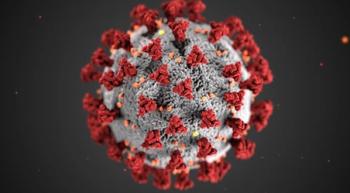
“The cancer care community urgently needs data on the effects of COVID-19, specifically in patients with cancer,” ASCO President Dr. Howard A. Burris III said in a press release.

New findings suggest that patients with thoracic cancer who receive chemotherapy three months after a COVID-19 diagnosis may have an increased risk of death compared to similar patients who underwent different treatment.

Here is a list of the recent trial initiations that occurred within the cancer space in May.

Dealing with the challenges of health and wellness after cancer treatment is tricky enough, but managing it in the midst of the COVID-19 pandemic is an even bigger obstacle. One survivor details how she tries to take it one wellness win at a time.

“Being a caregiver is a role that is defined by cancer more so than it is by the caregiver.”

The Food and Drug Administration approved the combination of Opdivo and Yervoy with 2 cycles of chemotherapy as a first-line treatment for certain patients with metastatic non-small cell lung cancer.

Chemotherapy killed my veins, and quarterly blood tests won't let me forget that. How it's impossible to ever forget the changes cancer brings.

One cancer survivor details protecting the story of other survivors from those who would sensationalize it.

A cancer survivor describes the changes of going for treatment during the pandemic.

During Skin Cancer Awareness Month, one melanoma survivor reflects on her treatment and the preventive measures everyone should take to avoid skin cancer.

The Food and Drug Administration approved Alunbrig for the first-line treatment of patients with ALK-positive metastatic non–small cell lung cancer.

Receiving a cancer diagnosis is scary enough, but amid the COVID-19 pandemic it has even more challenges. But cancer survivors can help ease their worries by listening and sharing their experiences.

From Johnson & Johnson discontinuing their talc-based baby powder in the U.S. and Canada after numerous lawsuits that cited the talc, a mineral similar to asbestos, caused cancer, to the ramifications of delayed cancer surgeries being felt by patients, here’s everything happening in the cancer space this week.

The Food and Drug Administration’s approval of the PARP inhibitor Lynparza for patients with metastatic prostate cancer gives a smaller subgroup of patients another treatment option if hormonal therapies do not work.

“Those who are doing well and are stable in terms of safety and tolerability can come into the office less often,” Dr. David R. Spigel, said. “(This is) a big win.”

Vitamin D is vital for anyone, but for people with cancer it can be especially vital even during social distancing rules.

The Food and Drug Administration recently approved the combination of Lynparza (olaparib) and Avastin (bevacizumab) for patients with advanced ovarian cancer that carries a specific mutation and has responded to previous treatment with platinum-based chemotherapy plus Avastin. Here’s what you need to know.

The Food and Drug Administration continues to approve cancer therapies amid the COVID-19 pandemic. Here are five approvals that patients with cancer may have missed.