









In this essay, a nurse colleague shows how extraordinary healer Deborah Austin Thompson is both an exceptional comforter and healer for patients with cancer.
In this essay, a nurse colleague shows how extraordinary healer Deborah Austin Thompson is both an exceptional comforter and healer for patients with cancer.

The Food and Drug Administration’s approval of Opdivo in combination with Yervoy for patients with unresectable malignant pleural mesothelioma marks the first new systemic therapy approved in more than 15 years in this setting.

After a recommendation against routine prostate cancer screening, rates of early disease declined while the incidence of advanced disease rose. The trend highlights the difficult balance between screening and potential overtreatment.

From study results demonstrating that the HPV vaccine substantially reduces the risk of cervical cancer to the first person known to be cured of HIV dying from acute myeloid leukemia, here’s what’s happening in the cancer landscape this week.

New treatments are needed for penile cancer, but it’s difficult to test drugs in clinical trials because the disease is so uncommon.

Each month, we take a look back at the most popular CURE® stories. Here are the top five stories for September 2020.

Primed to knock out cells vulnerable due to DNA-repair problems, PARP inhibitors are ushering in a targeted-drug era in prostate cancer treatment.

For some patients with metastatic kidney cancer, undergoing surgery after targeted or immune therapy sparks better health outcomes.

Patients with advanced or metastatic bladder cancer, after responding to initial treatment with chemotherapy, may preserve their health improvements by starting immunotherapy immediately.

After treatment for bladder or prostate cancer, many survivors confront permanent sexual side effects. The good news is that treatments and psychological support are available.

VERU Inc. announced it has completed enrollment of 40 men with metastatic prostate cancer who have become resistant to at least one androgen receptor targeting agent for its phase 2 study of VERU-111.

A growing number of treatments are available to men whose prostate cancer has spread and become resistant to hormonal therapy.

Five-year follow-up data from the phase 3 SOLO-1 trial demonstrates a nearly five-year delay in disease progression with Lynparza compared with a delay of just over a year with placebo in women with newly diagnosed, advanced ovarian cancer harboring a BRCA gene mutation.

New guidance from the Food and Drug Administration recommends that the makers of breast implants include a black-box warning, a patient decision checklist and other information on product labels that will help protect them against a cancer and an autoimmune condition that can arise from use of the devices.

A woman shares her late husband’s journey with advanced penile cancer to help others receive a diagnosis early, when the disease is still highly treatable and even curable.

On social media, CURE® recently asked its readers to share how an oncology nurse has helped them on their cancer journey.

After enjoying visits from therapy dogs during treatment for testicular cancer, a student pilot decides to volunteer to transport pets needing rescue, shelter or adoption.

A weekly high dose of chemotherapy did not improve survival for patients with epithelial ovarian cancer, though the treatment regimen was effective and well-tolerated.

Forward Momentum, a coalition launched by a biopharmaceutical company and three partners, focuses on the health disparities faced by Black men with prostate cancer.
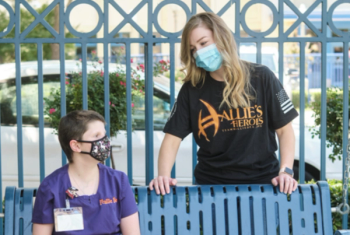
Oncology nurses have the power to heal, and in many cases, the power to inspire their patients no matter their age.

Mary Schueller devoted her entire career to helping others with cancer, and the devotion she displayed to that cause is what makes her an extraordinary healer.

One patient recounts how his oncology nurse's love for healing helped him on his treatment journey.
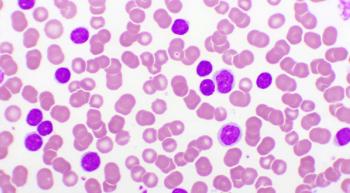
In this special hematology focused issue of CURE® we look at all the promising treatments and research for both adults and children with blood cancers.

Mantle Cell Lymphoma (MCL), as described in this issue of CURE®, has an interesting and inspiring story. It was one of the first cancers known to have a genetic abnormality-chromosomal translocation t(11;14).
From a new study showing that the iCanQuit smoking cessation app is more likely to work than typical guidelines, to the House unanimously passing the Veteran’s Prostate Cancer Treatment and Research Act, here’s what’s happening in the cancer landscape this week.
Oncology nurses are there for many moments on the cancer journey and can help champion important milestones that might otherwise go by unnoticed.
Finding the best care team can make all the difference for patients with diseases like multiple myeloma.

Clinical trials lead to new cancer treatments — and can give a patient access to effective drugs years before they’re made available to the public.

In this week’s episode of the CURE® Talks Cancer podcast, we chat with Dr. Tanja Gruber, the chief of pediatric hematology, oncology and stem cell transplantation at Stanford Children’s Health, about how pediatric cancer treatment is evolving thanks to advances in treatments like immunotherapy, and what parents should do after their child receives a diagnosis.

Here is a list of some recent trials that launched within the cancer space in September.