





From a 6-year-old cancer survivor visiting all 50 states to give wagons to pediatric patients to Kathy Griffin taking an honest look at cancer and opioid addiction, here’s what’s happening in the cancer space this week.
From a 6-year-old cancer survivor visiting all 50 states to give wagons to pediatric patients to Kathy Griffin taking an honest look at cancer and opioid addiction, here’s what’s happening in the cancer space this week.

Experts from the St. Jude’s Children’s Research Hospital advise young-adult childhood cancer survivors to increase their physical activity levels, eat well and stay socially active to reduce their risk of becoming frail and prevent cognitive decline.

Recent CDC recommendations that children ages 12 to 15 are eligible to receive the Pfizer COVID-19 vaccine can include patients with cancer, except under certain extreme circumstances, says an expert from St. Jude Children’s Research Hospital.
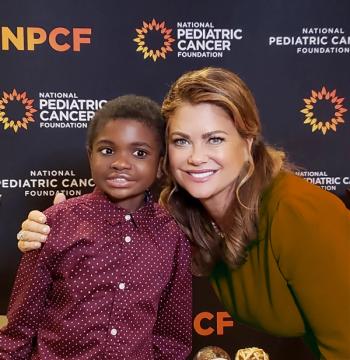
In an interview with CURE®, Ireland shared details on how to get involved in the "43 challenge" and offered some advice to families who may find themselves impacted by pediatric cancer.

From President Biden convening a bipartisan meeting to discuss cancer treatments and research to a 5-year-old patient with hepatoblastoma asking for donations to a local food bank instead of presents for her birthday, here’s what’s happening in the cancer space this week.

From a Pennsylvania-based nonprofit taking advantage of recent blizzards to help local families in need to the creation of a “Cancer Bill of Rights”, here’s what’s happening in the cancer landscape this week.
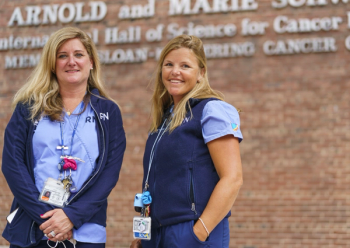
Working in the pediatric oncology field requires a special touch, one full of compassion and selflessness. Traits that oncology nurses have in spades.

The RACE for Children Act will create more clinical trial options for young patients with cancer and, ultimately, more pediatric oncology drugs.

The dependent coverage provision in the Affordable Care Act has helped adolescent and young adult patients with cancer stay on health insurance longer than those who had cancer before the ACA was signed into law.
In an interview with CURE®, Emily Whitehead details her journey as a pediatric cancer survivor and how you won’t be able to predict it.
On this week’s episode of the “CURE® Talks Cancer” podcast, pediatric cancer patient Jelena and mom Andrea join us to talk about what it was like facing cancer and a pandemic at the same time, and how they were excited to partner with St. Baldrick’s to raise money for pediatric cancer research.
In this week’s episode of the CURE® Talks Cancer podcast, we chat with Dr. Tanja Gruber, the chief of pediatric hematology, oncology and stem cell transplantation at Stanford Children’s Health, about how pediatric cancer treatment is evolving thanks to advances in treatments like immunotherapy, and what parents should do after their child receives a diagnosis.

For years, childhood blood cancers were understudied forcing patients’ treatments into a one size-fits-all approach. But new efforts are changing that.

The V Foundation is set to host its annual Dick Vitale Gala on Sept. 4, 2020, virtually, to help raise funds and awareness for pediatric cancer.

Utilizing data from the INFORM registry, researchers were able to identify key biologic targets in pediatric patients with cancer utilizing an algorithm that matched them to targeted treatments with promising results.

From a 105-year-old cancer survivor recovering from COVID-19 to a 7-year-old finishing his last chemotherapy treatment for lymphoma and also beating COVID-19, here’s what’s making the headlines in the cancer landscape this week.

In this week’s episode of the “CURE Talks Cancer” podcast, we spoke with ESPN broadcaster Dick Vitale on his passion as a longtime champion to achieve victory over cancer.

The Food and Drug Administration approved Koselugo to treat pediatric patients aged 2 years or older with neurofibromatosis type 1, a rare genetic disorder that causes tumors to grow on nerves.

A microsimulation model found that evolving approaches are associated with improved life expectancy among childhood cancer survivors – particularly for those who received chemotherapy alone.
New strategies are needed to help adolescent and young adult cancer survivors get follow-up care.
For a variety of reasons, some AYAs disappear from the health care system during the transition from treatment to survivorship and do not get the medical follow-up they require.

Going back to school after finishing cancer treatment can be exciting yet anxiety-inducing for a child — and a parent. Memorial Sloan Kettering neuropsychologist and child psychologist Stephen Sands has tips to help make the transition smoother.
For Childhood Cancer Awareness Month, here’s a round-up of the latest news and updates in this disease space.
Through a children’s book that describes a fanciful dream, an author/illustrator remembers a youngster lost to cancer — and raises funds to boost research.

Although survival among AYAs with cancer has improved over recent decades, disparities within the severity of stage, race/ethnicity and socioeconomic status are still just as prevalent.