




Skin Cancer
Latest News

Advertisement
Latest Videos


Advertisement
More News

In honor of Skin Cancer Awareness Month, CURE® compiled some recent news and updates from this field that patients, survivors and caregivers may have missed.

A melanoma survivor pens a poem about his cancer journey, losing his wife to melanoma and how he lives his life after these experiences.

Patients with melanoma treated with Keytruda had improved recurrence-free survival without an effect on their quality of life.
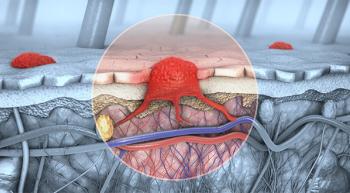
When caught and treated early, skin cancer is highly curable. When allowed to progress, however, it can cause disfigurement and even death.

Which story – of hope or fear – is the best experience to relate to help another?

In patients with resected high-risk stage 3 cutaneous melanoma, distant metastasis-free survival at 3.5 years was 65.3% in patients treated with Keytruda compared with 49.4% in those treated with placebo, which was also consistent in patients with PD-L1-positive tumors.

Keytruda demonstrated clinical benefit for patients with recurrent and metastatic disease, according to an expert.

Active surveillance in sentinel lymph node positive melanoma could delay surgery but may result in the same risk of the cancer coming back.

Chronic immune-related adverse events from anti-PD-1 therapy occur in many patients with advanced melanoma, but shouldn’t deter them from seeking treatment that can provide long-term survival, according to an expert from Vanderbilt University Medical Center.

FDA approval of immunotherapies and BRAF/MEK inhibitors may have impacted overall survival, with a change from seven months between 2010 and 2014 to 13 months between 2015 and 2019.
As the winter months stretch on, those looking to treat Seasonal Affective Disorder (SAD) may be tempted to use indoor ultraviolet (UV) tanning devices. Not only is indoor tanning a dangerous habit, it does not successfully treat SAD.

A patient with recurrent basal cell carcinoma discusses his cancer journey, his latest challenge and how he’s now prioritized quality of life over quantity.

Intratumoral injection—the boosting of the immune response against metastatic melanoma by the direct injection of immunotherapy into tumor masses—is a promising treatment method because it’s effective AND it seems to cause fewer toxicities for the patient than combination systemic immunotherapy.
Gina Roller’s best friend, Kerri-Lynn Larimer, adopted and lived by the motto “crazy not to” long before she was diagnosed with metastatic melanoma.
We answer this question with the help of Mohammed Kashani-Sabet, M.D., the Director, Center for Melanoma Research and Treatment; and Medical Director, Cancer Center, California Pacific Medical Center.
We answer this question with the help of a pharmacist at a large oncology practice who wishes to remain anonymous.

Avastin, in combination with carboplatin plus paclitaxel (types of chemotherapy), improved progression-free survival and overall survival compared with those who received chemotherapy alone for patients with untreated advanced mucosal melanoma.

Combination treatment with Opdivo and Yervoy may have better overall survival rates for patients with metastatic uveal melanoma.

In this episode of the “CURE Talks Cancer” podcast, we spoke with someone who has undergone 41 surgeries and physically debilitating treatments during his more than 15-year journey with several cases of skin cancer. We discussed his cancer journey, and why, as he starts a new treatment after his most prior therapy failed, he’s focused on quality rather than quantity of life.
A roundup of some skin cancer news and updates that occurred in 2020 that patients may have missed.

Machine learning may be used to predict disease progression in patients with advanced melanoma.
Patients with resected, high-risk, stage 3 melanoma who were randomized to receive Keytruda (pembrolizumab) achieved a three-year recurrence-free survival rate of 63.7% compared to 44.1% in patients randomized to placebo.

A two-time cancer survivor looks back at her cancer journey and offers 4 tips for a first-time patient with cancer.

Taking cholesterol-lowering drugs may provide a mortality benefit in women with newly diagnosed colorectal cancer, breast cancer and melanoma, although more research is needed to confirm this potential association.

Recent immunotherapy approvals for patients with metastatic melanoma has widened the treatment landscape, but new research shows that patients associated with positive sociodemographic factors are more likely to receive immunotherapy.
Advertisement
Advertisement
Trending on CURE
1
Could a Genomic Test Spare You Extra Years of Hormone Therapy?
2
I’m Jealous of the World — and Grateful I Got to Be Part of It
3
My Sister and I Share a BRCA2 Mutation. We Didn’t Make the Same Choices
4
Three August Blood Cancer Approvals and What They Mean for Care
5