

Opinion|Videos|July 14, 2026
Frontline and Subsequent Treatment Planning for Metastatic EGFR-Positive NSCLC
Dr. Konduri provides a clinician's overview of the frontline to subsequent-line treatment framework for metastatic EGFR-positive NSCLC.
Advertisement
Episodes in this series
Dr. Konduri provides a clinician's overview of the frontline to subsequent-line treatment framework for metastatic EGFR-positive NSCLC. Patient assessment at each visit includes not only laboratory values and organ function but also social circumstances, travel capacity, frailty, and ability to tolerate intensive combination regimens versus monotherapy. Clinical trial participation is encouraged at all lines.
Current standard-of-care frontline combination approaches offer meaningful improvements in both short-term and long-term outcomes compared to historical monotherapy. Frontline treatment selection directly affects subsequent-line options, making the initial choice consequential beyond the immediate therapeutic benefit. When frontline therapy stops yielding significant benefit, second-line therapy is selected based on available evidence and the mechanisms of prior treatment.
Elizabeth Dennis describes the communication approach when patients are overwhelmed by new diagnoses and complex information: encouraging one step at a time, ensuring patients understand their specific diagnosis and treatment plan, building a support system including caregivers and community connections, and aligning around individualized goals, such as what success looks like for the patient as well as for the care team.
She addresses the fear associated with the word chemotherapy directly: many patients' fears are based on others' prior experiences, which may reflect older regimens or very different clinical circumstances. Explaining the specific therapy, its goals, its expected side effect profile, and the proactive management strategies available helps patients feel informed, supported, and confident rather than fearful. Patients should understand that no 2 treatment experiences are identical, and that their care team is available around the clock through telephone and secure patient portal messaging to address any concerns that arise.
Lynn Abbott-McCloud confirms that peer discussions at LiveLung meetings, where patients share their own experiences across the full spectrum, from very difficult to manageable, are often more reassuring to newly diagnosed patients than any formal presentation, because they convey the reality that individual experiences vary widely.
Advertisement
Related to this article

Debbie Legault, whose daughter was diagnosed with breast cancer at 27, urges shoppers to skip pink ribbon products and donate directly to support organizations.

A study of 52,236 patients with cancer found that episodes of unintended weight loss affected 46.63% of patients and were tied to shorter overall survival.

Diagnosed with leukemia at 8 years old, Harper feared that losing her hair would change who she was. She reflects on body image, confidence and finding a sense of herself during cancer treatment.
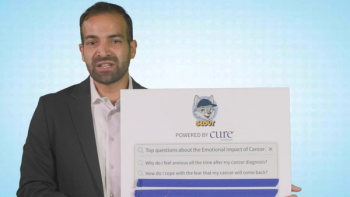
A psycho-oncologist answers 5 common questions about cancer-related anxiety, depression, fear of recurrence and emotional well-being.

U.S. counties where more residents had medical debt in collections had higher rates of late-stage lung, head and neck, colorectal and several other cancers, according to a study of 2,958 counties published in October 2026 in JAMA Network Open.
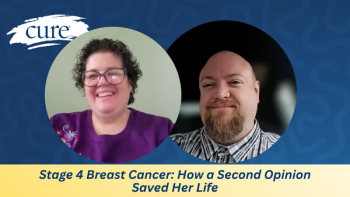
Diagnosed with stage 4 breast cancer weeks after giving birth, Eileen Carter explains why getting a second opinion changed the course of her care.

Libtayo survival data, a rare positive osteosarcoma trial and new ADCs for breast, lung and stomach cancers are among ESMO 2026 abstracts to watch.

Diagnosed with bone cancer at 14, college setter Gabby Orlet shares how volleyball, honesty and her family carried her through years of treatment.
Advertisement
Advertisement
Trending on CURE
1
Stage 4 Breast Cancer: How a Second Opinion Saved Her Life
2
Psycho-Oncologist Answers 5 Common Questions About the Emotional Impact of Cancer
3
Libtayo, Osteosarcoma and More: 5 Other ESMO 2026 Abstracts to Watch
4
Diagnosed With Stage 4 Breast Cancer Weeks After Giving Birth
5