
Among patients with heavily pretreated chronic lymphocytic leukemia, treatment with Epkinly monotherapy showed deep responses.
Among patients with heavily pretreated chronic lymphocytic leukemia, treatment with Epkinly monotherapy showed deep responses.

Patients newly diagnosed with multiple myeloma who are transplant ineligible or deferred may benefit from receiving a Darzalex treatment combination.

Treatment with Enhertu showed favorable outcomes regarding health-related quality of life in patients with HER2-positive breast cancer, regardless of brain metastases.

Targeting the estrogen receptor and HER2 pathways improved progression-free survival in patients with HR-positive, HER2-positive metastatic breast cancer.

CURE® spoke with an expert about follicular lymphoma, a disease that is still considered incurable.
A combination of Imbruvica and venetoclax showed significantly prolonged progression-free survival in patients with untreated CLL, an expert explained.

Younger patients with breast cancer and the BRCA gene showed improved survival after undergoing risk-reducing mastectomy and/or risk-reducing salpingo-oophorectomy.

Black patients may be more affected by certain side effects from Talvey compared with White patients with multiple myeloma, an expert told CURE®.
Outpatient lymphodepletion followed by Tecartus was found to be safe and effective in treating B-cell acute lymphoblastic leukemia and mantle cell lymphoma.
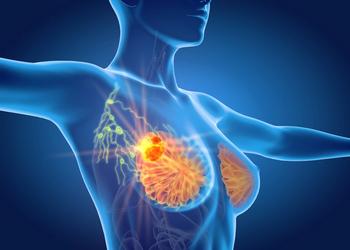
Presurgical camrelizumab plus chemotherapy significantly improved responses versus chemotherapy alone in early or locally advanced TNBC.
Tecentriq plus chemotherapy did not improve event-free survival in triple-negative breast cancer but increased rate of complete tumor removal.
Patients with high-risk, HR-positive, HER2-negative breast cancer treated with HER3-DXd with or without Femara (letrozole) experienced fewer side effects than with chemotherapy.

Several biomarkers may predict improved treatment responses and outcomes in patients with triple-negative breast cancer.

Radiation therapy resulted in improved quality of life and fewer side effects for older patients with stage 1 luminal-like breast cancer than endocrine therapy.

No significant survival benefits were found when comparing three CDK4/6 inhibitor combinations during initial treatment for HR-positive, HER2-negative metastatic breast cancer.

Detections of ctDNA at baseline in patients with HR-positive early breast cancer were associated with larger tumor size.

In certain patients with ESR1-mutant breast cancer, time to next treatment was slightly higher with Orserdu versus PFS in a phase 3 trial.
Patients with early breast cancer who are older may experience high-grade immune-related side effects after receiving immune checkpoint inhibitors.

Treatment with imlunestrant either with or without Verzenio was shown to improve progression-free survival in some with ER-positive, HER2-negative advanced breast cancer after endocrine therapy.

Receiving immediate surgery was associated with a reduction in local recurrence of breast cancer in elderly patients versus delaying surgery.

Adjuvant Lynparza remains beneficial for patients with BRCA1/2 mutation–positive, HER2-negative high-risk breast cancer, study results have shown.

Data from the phase 3 DESTINY-Breast06 trial were presented during the 2024 San Antonio Breast Cancer Symposium.

Findings from the phase 1 SERENA-1 study were presented at the 2024 San Antonio Breast Cancer Symposium.
Autologous stem cell transplant plus Rituxan did not improve survival outcomes in certain patients with mantle cell lymphoma compared with Rituxan alone.

Experts discussed what other information is needed to understand how best to use Kisqali in treating patients in the adjuvant setting with early breast cancer.

Updated data from the phase 3 DREAMM-7 trial was presented during the 2024 ASH Annual Meeting and Exposition.

A Phase 3 trial of uproleselan failed to improve overall survival in relapsed/refractory AML, though it may benefit primary refractory patients.

The Venclexta-based regimen improved complete response rates in patients with acute myeloid leukemia and myelodysplastic syndromes.

In patients with certain B-cell blood cancers, heart-related side effects may occur less after receiving second-generation BTK inhibitors.
Patients with treatment-naive CLL/SLL experienced long-term improved efficacy when treated with Brukinsa compared with bendamustine plus Rituxan.