
When my friend was diagnosed with breast cancer, my role became supporter over survivor.
When my friend was diagnosed with breast cancer, my role became supporter over survivor.

Through Bristol Myers Squibb’s ‘Survivorship Today,’ Brown — a star of the TV series “This Is Us” — has been interviewing cancer survivors about their journeys and the kinds of support they need.
In an interview with CURE®, Emily Whitehead details her journey as a pediatric cancer survivor and how you won’t be able to predict it.
Cancer survivor offers his advice to the newly diagnosed as they start their treatment journey.

For head and neck cancer survivor Jason Mendelsohn surviving cancer was only the beginning of his journey as handling severe side effects from treatment altered his day-to-day life.

I get asked, a lot, about how to return to normal while living with cancer. I don’t want to be returning to the past since I’d rather be looking toward the future.
For one survivor, finding a lost breast prosthesis coincided with another cancer scare.
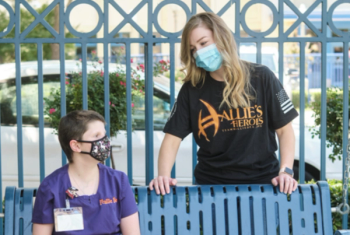
Oncology nurses have the power to heal, and in many cases, the power to inspire their patients no matter their age.

Talking about cancer can be a great burden but sharing one’s story can be liberating. Even if you share it while fishing.
One patient recounts how his oncology nurse's love for healing helped him on his treatment journey.

You know yourself best, so try and figure out what works best for you and do not be afraid to give yourself the precious gift of self-care during and after your cancer journey. You deserve this.

I suffered a recurrence a few years ago and couldn’t bear to hear, or utter, the word “cancer.” So, I decided to counter-attack by belittling the disease and calling it “chocolate.” Then, I got my sweet revenge.
There are some amazing studies that show how certain birds help each other in times of need. For us cancer survivors, we should be like these birds and help each other more.

As difficult as my cancer journey was, there were a lot of good things that came out of it. Cancer changed my life. It changed my perspective. It showed me what is truly important and valuable in life.

Some cancers and treatments can result in cognitive changes that affect thinking, learning, processing or remembering information. These changes can affect many aspects of life such as the ability to work or even to do everyday tasks. Find out whether you have an increased risk of cognitive changes.
Each person responds to treatment differently. No one knows in advance how effective cancer treatment will be. There's also no way to know how long anyone will live—with or without cancer.

I’ve already warned my family, if I decide to act a little crazy in the future, don’t worry. I’ve got a good excuse. I can always blame it on the cancer. It’s a good excuse, sometimes.
We have all had times in our lives where everything goes wrong at once. We got through them, and we continue to get through them.
Some cancer patients and survivors face the real risk of infertility due to a cancer diagnosis and/or its treatment. Livestrong Fertility helps you understand your fertility risks and options, and get access to fertility preservation discounts.

Opioids are a common tool in treating cancer-related pain, but they are also at the center of a nationwide epidemic. One that researchers have found cancer patients are not as linked to as previously thought.
Cancer survivors are like bumblebees in that they continue to go on and fly despite the countless obstacles they face.

We arrived in a remote region of Long Island just in time to sit back on the deck overlooking the bay and catch a magical, breathtaking sunset. Five years of struggling through cancer, we’d damn well earned this moment.
Cancer survivors sometimes wonder about their purpose on earth as time passes and so many others pass away before us with cancer. We need to be gentle with ourselves and not stress to much.
An author and two-time cancer survivor offers fellow writers some advice on what they’ll need to know if they’re considering writing a book about surviving cancer.

On social media, CURE® recently asked its readers to share the most surprising thing that’s changed in their life since receiving a cancer diagnosis. Here, we share some of their responses.
The relationship that develops between a cancer patient and their oncology team is a most intimate thing.
Like the novel coronavirus, cancer is invisible, unrelenting, and always surrounding us.

Patients with cancer have a right to choose not to treat their illness, even if it’s not a popular decision.
A two-time cancer survivor discusses how survivors sometimes get assigned an unwilling task of being a cancer educator or ambassador to friends and family.
A former clinical trial designer at the National Cancer Institute offers patients with cancer advice on why they should consider joining clinical trials and provides insight into two common misconceptions about trials.