




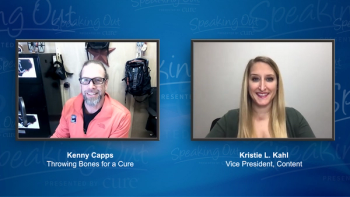
As part of its Speaking Out video series, CURE spoke with Throwing Bones founder, Kenny Caps, about improving patient-physician communication throughout myeloma care.
As part of its Speaking Out video series, CURE spoke with Throwing Bones founder, Kenny Caps, about improving patient-physician communication throughout myeloma care.
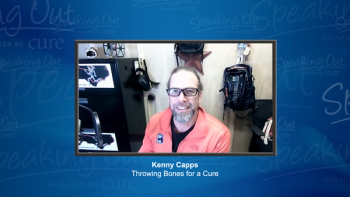
As part of its Speaking Out video series, CURE spoke with Throwing Bones founder, Kenny Caps, about treating myeloma as a chronic disease and how the multidisciplinary approach to care can assist in challenges, like financial toxicity.

CAR-T cell therapies offer patients with lymphoma a chance for long-term remission, but none have yet to receive a greenlight from the FDA as a first line of treatment.

The number of people developing leptomeningeal disease is increasing for the same reason that diagnoses of brain metastases are on the rise: People are living longer, giving cancer more time to spread.

I’ve recently joined the masses in catching up with routine health care that was put off during the COVID-19 pandemic.

Guidelines for the treatment of patients with brain metastases is moving from whole brain radiation therapy to less toxic treatment options to potentially improve care and increase survival.
As part of its Speaking Out video series, CURE spoke with Throwing Bones founder, Kenny Caps, about raising awareness for multiple myeloma, and why sharing one’s story is helpful for others.

Treatment with ofatumumab plus an aggressive regimen of chemotherapies resulted in a response rate of more than 80% in patients with newly diagnosed mantle cell lymphoma.

In a recent clinical trial, treatment with Bavencio plus Inlyta produced promising outcomes in the presurgical treatment of patients with non-metastatic, clear cell renal cell carcinoma.

Better therapies are on the horizon for cancer that has spread to the brain, including a clinical trial that matches patients with treatments based on unique genetic changes in brain metastases.

In spending just a few minutes a day on Twitter, I’ve created a support group with other cancer survivors who know how it feels to face the disease.

The Food and Drug Administration’s greenlight of Vonjo marks the first approved therapy to address the needs of patients with cytopenic myelofibrosis, a type of myeloproliferative neoplasm.
Ninety-eight percent of patients with pretreated relapsed/refractory myeloma responded to treatment with Carvykti, a newly approved CAR-T cell therapy for this patient population.
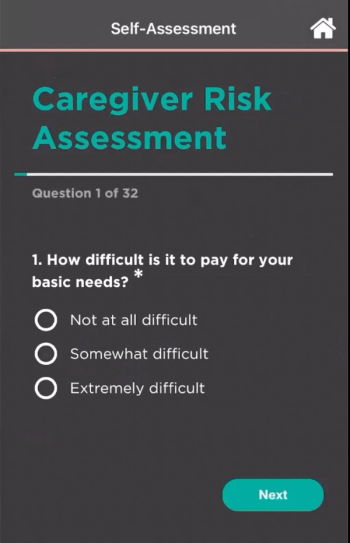
When caregivers — considered by many to be an essential part of a patient’s care team — have the tools they need to care for themselves and their loved ones, cancer outcomes can be better, too.

When I was diagnosed with cancer, I thought of only two things: my loved ones and how much time I had left with them.

The post-scanxiety crash felt like an avalanche for me, and even though my scans were clear, it took talking to another cancer survivor to snap me out of it.

The Food and Drug Administration plans to speed up its review of Opdivo in the pre-surgical setting for patients with non-small cell lung cancer.

There are now more drugs than ever to treat and prevent graft-versus-host disease in patients with blood cancer who receive a stem cell transplant.

Regardless of a patient’s age, comorbidity status or disease risk, an expert from Memorial Sloan Kettering Cancer Center notes how targeted therapies have become the standard of care in treating chronic lymphocytic leukemia.

Dr. Nancy U. Lin actors as a mentor for her patients, helping to guide them through the cancer experience, says her colleague Dr. Ines Vaz-Luis.

As a cancer survivor, I know all too well the struggles with depression and sadness. Fold in those grey winter days and It makes for a disastrous recipe.

From the death of “America’s Got Talent” contestant Jane “Nightbirdie” Marczewski to “Good Morning America” anchor Robin Roberts announcing her partners breast cancer diagnosis, here’s what’s happening in the cancer space this week.
Treatment with TRPH-222 led to lasting responses in certain patients with relapsed/refractory B-cell non-Hodgkin lymphomas, warranting a larger investigation into the drug, according to the researchers.

Sara Montiel says she experienced severe body image issues after her breast cancer diagnosis and subsequent double mastectomy, but she now recalls how she learned to realize how cancer was a blessing.

Chemotherapy treatments for breast cancer would likely cause my daughter to lose her hair, but instead of waiting for her locks to fall out on their own, she took matters into her own hands.
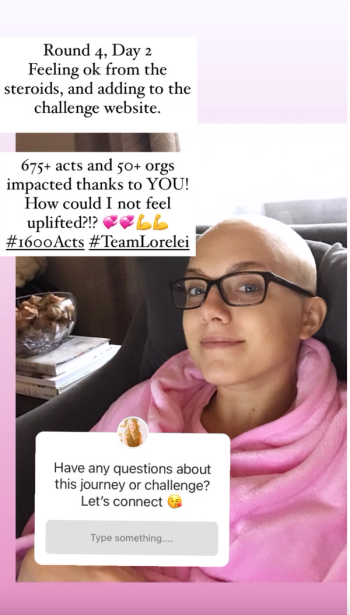
The 16-week challenge was simple: do something kind each week during my chemo treatment and tell me about it on social media. The goal was ambitious: 1,600 acts.

Last year, my wife died of triple-negative breast cancer that was caused by a genetic mutation. If her family risk was discussed more openly, she — and many others with an inherited predisposition to cancer — may still be here today.

Treatment with Enhertu was associated with improved survival across several subgroups of patients with metastatic breast cancer, compared with standard-of-care chemotherapy.

Nina Luker has shared her journey with diffuse large B-cell lymphoma on social media with more than 100,000 followers, but says she noticed a difference in the kinds of comments she received after treatment was over and she was deemed “not as vulnerable” anymore.

Getting men to talk about their breast health is like fishing in an under-stocked pond, so I turn to the advice of my breast cancer sisters.