








Radiation therapy in place of systemic therapy may improve quality of life and treatment costs for patients with renal cell carcinoma.
Radiation therapy in place of systemic therapy may improve quality of life and treatment costs for patients with renal cell carcinoma.
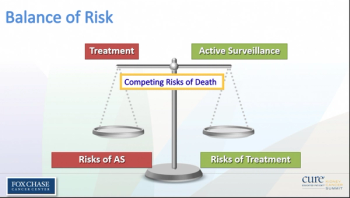
Some patients with kidney cancer do not need to rush into the operating room, explained Dr. Alexander Kutikov.

Men are often discouraged by society from openly sharing their emotions. A cancer survivor explains why lessons from childhood around how men should behave prevented him from finding support for his mental health.

Targeted therapies offer new hope for patients with HER2-mutated non-small cell lung cancers.

A patient with stage 4 lung cancer explains why Dr. Shirish Gadgeel is a ray of sunshine and hope who makes patients with cancer feel that living a long life is a possibility.
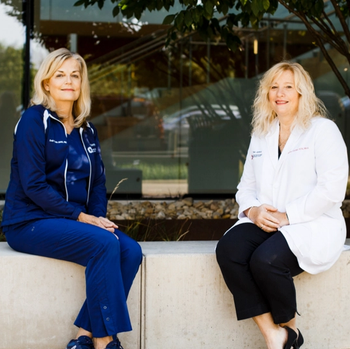
Christine Eastep demonstrates the highest commitment to every one of the patients and her staff to improve the outcomes in lung cancer treatment, with a commitment to sending her staff nurses to tobacco cessation classes.

A cancer caregiver explains why the news of a celebrity death due to cancer reminds her that everyone deserves privacy, regardless of their celebrity status.

A woman describes the day she was diagnosed with breast cancer, which flipped her life upside down.

Dr. Roy H. Decker is a lung cancer hero — a “triple threat” in lung radiation oncology as a clinical innovator, teacher and ground-breaking clinical trialist, explains a colleague.

A caregiver and mother of a breast cancer survivor explains the common misunderstanding people have when asking how her daughter’s health post-treatment.

A knowledgeable and compassionate oncology nurse can make a huge different in a patient’s cancer treatment.

With three BTK inhibitors approved for treatment of mantle cell lymphoma, patients and providers should consider side effects and insurance coverage before deciding on a drug.

Several CURE® Calendar Contest winners explain the stories behind their winning artwork and how their artmaking helped them through the difficulties of cancer.

A woman living with metastatic breast cancer explains why TV commercials depicting carefree, happy people do not reflect the reality of her experience. “My life and the lives of those affected by metastatic breast cancer is anything but normal. Too many of us are dying every day,” she writes.

From Taylor Swift’s heartfelt tribute to a 4-year-old boy who died from cancer to Senator Amy Klobuchar’s announcement that she is cancer-free, here’s what’s happening in the cancer landscape this week.
An expert explains how two common myeloma treatments – CAR-T cell therapy and bi-specific antibodies – work, and which patients may want to steer clear from these treatment modalities.

The combination of Opdivo and Yervoy may provide a survival benefit for asymptomatic patients with melanoma who have brain metastases, although more efforts are needed to include this patient population in trials.

Although the interest of at-home care including the administration of cancer infusions has grown since the start of the COVID-19 pandemic, hesitation looms over its convenience, cost and safety.

A cancer survivor explains how the new treatments coming out for all types of cancer give her hope. “If we are diagnosed today, a cure or remission may come out next week or next month, or next year to give us additional time to live,” she writes.

On this episode of the “Cancer Horizons” podcast, actress and comedian Jessica St. Clair and writer Dan O’Brien share their cancer stories and how they channeled their emotions through creativity.

A phase 2 trial of aspacytarabine (BST-236) was initiated in patients with AML and MDS.

Imbruvica plus Breyanzi, a CAR-T cell therapy, improved outcomes in patients with relapsed/refractory chronic lymphocytic leukemia, according to recent research.

An expert explains what treatment strategies are available for patients with metastatic breast cancer, how far research has come and why patients shouldn’t lose hope.

A cancer survivor describes the emotional rollercoaster of learning her tumor marker levels have risen. "I had decided that this would be the year I would bid farewell to my cancer journey. So much for my big plan," she writes.

Although the risk for myocarditis related to immune checkpoint inhibitors is an estimated 1%, findings from a recent study highlight the need for improved ways to screen and treat for this potential side effect.

Recent results may lead to more checkpoint inhibitor options and lower treatment prices, giving accessibility to more patients with lung cancer worldwide.

Imfinzi plus platinum-pemetrexed chemotherapy induced survival improvements in patients with previously untreated, unresectable malignant pleural mesothelioma, compared with chemotherapy alone.

The incidence of young-onset colorectal cancer has been increasing in the past years, and despite being more physically active and receiving more intense treatments, younger patients are not living longer with the disease than older patients.

A woman with ovarian cancer explains why she was reluctant to get a port put in and why she ultimately went forward with it. “Somehow, I felt that if I got the port, I was giving in to the cancer,” she writes.

A breast surgeon discusses what patients and their caregivers should know before breast cancer surgery.