








CURE® spoke with a cancer rights attorney about employment rights and how patients and their caregivers can learn more to ensure they are being protected.
CURE® spoke with a cancer rights attorney about employment rights and how patients and their caregivers can learn more to ensure they are being protected.

The FDA recently approved an expanded indication for Lorbrena as a first-line treatment option for a subset of lung cancer that has spread to the brain. Compared to previously-approved options, experts say Lorbrena is more effective.

A playwright with male breast cancer examines some beliefs that may influence our survival.

With a limited number of COVID-19 vaccines available, the most important takeaway from the updated NCCN guidelines is that patients with cancer get a COVID-19 vaccine — no matter which one it is — according to an expert from the Seattle Cancer Care Alliance and Fred Hutchinson Cancer Research Center.

An expert discusses therapies that are changing the treatment landscape and the research to make this disease more livable.

The agency granted approval to the revised label of Vyxeos to now include treatment for newly diagnosed therapy-related acute myeloid leukemia or disease with myelodysplasia-related changes in pediatric patients aged 1 and older.
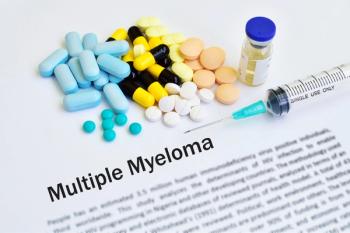
Efficacy is one of the most important drivers in determining which cell-based therapy a patient with multiple myeloma receives, according to an expert. However, she says, other factors, such as how aggressive the disease is, may play a major role.
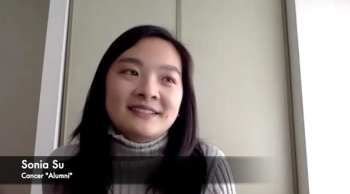
The term “survivor” is often used to describe people who have successfully completed their cancer treatments, but Sonia Su feels like it doesn’t quite capture the complexity of what it means to be in remission.

A patient with metastatic cancer writes about how the unknowns of her disease have shaped her life and health experiences, and how she has learned to live with that uncertainty.

Acupuncture techniques proved to be an effective treatment that reduced pain severity and increased quality of life among a diverse sample of cancer survivors experiencing chronic musculoskeletal pain.

Progress on palliative care education and adoption in cancer centers has been slow, but an expert from The University of Texas MD Anderson Cancer Center says studies show that it can improve cancer outcomes.

Previously, treatments for patients with extensive-disease small cell lung cancer were limited with a poor prognosis. Researchers sought to investigate if Opdivo plus Yervoy or Opdivo alone would improve survival.

On social media, CURE® recently asked its readers to share how cancer has changed the way they live their lives. Here’s what they said.

A cancer survivor recalls some experiences he had along his journey and reminds others to be the CEO of their care team, as it’s their life on the line.
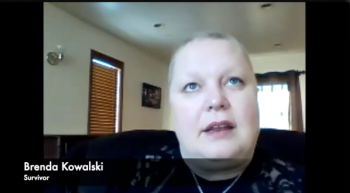
Although “social distancing” has become a common term used to describe the safe distance people keep from others to avoid contracting COVID-19, stage 1 ovarian cancer survivor and teacher Brenda Kowalski reminds patients who may be starting out on their cancer journey that it’s important to not “socially distance” yourself from friends when you need support.

Recent study results show an association between living in an area of socioeconomic deprivation and poor outcomes for patients with cancer who were treated in clinical trials.

A prostate cancer survivor recalls a time when the cancer center’s staff helped him realize that its OK to have fun while receiving cancer treatment.
Abecma is the first cell-based gene therapy approved for the treatment of patients with relapsed and refractory multiple myeloma who did not respond to at least four treatments, or whose disease returned after those four lines of therapy.

New clinical trials open doors for positive changes in treatment of colorectal cancer.

A woman who is living with metastatic breast cancer pens a tribute to a late friend and fellow patient, Penny, who continues to send her signs that help her keep going.

It is difficult for anyone to receive a cancer diagnosis, but when someone who is younger than average finds out they have gastrointestinal cancer, they may face other challenges.

Doctors and survivors urge women to consider the future both before and after receiving a cancer diagnosis.

Although Keytruda did not improve overall survival when compared with chemotherapy, patients with a higher PD-L1 expression may derive a greater benefit with Keytruda, as shown with a longer median overall survival.

A cancer survivor yearns for the “touch starvation” brought on by the COVID-19 pandemic to be over. She writes about how just one hug can make a huge difference for people.

From a Baltimore restaurant owner traveling six hours to cook for a terminally ill customer to the death of a pioneer in breast cancer treatment, here’s what’s happening in the cancer landscape this week.

Rozlytrek continues to demonstrate clinical benefit for patients with ROS1 fusion-positive non-small cell lung cancer, which includes patients with central nervous system metastases.

Although COVID-19 has shaken our lives in so many ways, it’s important to keep our health one of our top priorities while also staying safe. We must find widely acceptable ways to screen for cancer in this new era so that we don’t turn the clock back on the gains we have made in the past few decades.

CURE® spoke with Monica Fawzy Bryant, chief operating officer of Triage Cancer, about health insurance options and what patients with cancer need to know.

Many cancer survivors may feel the urge to use their disease as a convenient excuse for avoiding unpleasant situations, writes a survivor. However, she urges others to avoid giving into that power.

Here is a list of some recent trials that launched within the cancer space in March.