




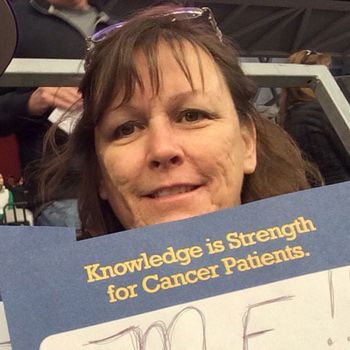
Shannon Kerr isn't shy about proclaiming her status as a cancer survivor. At the 2016 Battlefrog Fiesta Bowl in Phoenix, Kerr was joined by a stadium full of fans in drawing attention to the disease and the toll it can take.
Shannon Kerr isn't shy about proclaiming her status as a cancer survivor. At the 2016 Battlefrog Fiesta Bowl in Phoenix, Kerr was joined by a stadium full of fans in drawing attention to the disease and the toll it can take.

In an interview with CURE, Anees B. Chagpar, from The Breast Center at Smilow Cancer Hospital at Yale-New Haven, shares her thoughts on the final guidelines and how they change the focus of screening.

Doing a little reflection about where I've been and how far I've come is just as important as making resolutions.

The approval was based on findings from the phase 3 ENDEAVOR trial.
For some patients, doctors recommend treatment after surgery to reduce the risk of melanoma developing again.
Why does a cancer diagnosis always come down to being a winner or a loser?
The cancer experience is different for all of us that is sometimes easy to navigate and sometimes not at all. Yet we all join the same team once we hear the words “you have cancer.” We can help each other to cope.

The approval was based on a near doubling in progression-free survival (PFS) seen with the treatment compared with observation in the phase 3 PROLONG trial.
The first thing cancer took away was my innocence. I still remember what it was like to hear those five words: "I'm sorry, you have cancer."
Ed chronicles part II of his chronic lymphocytic leukemia (CLL) story from the third person.

Though patients and survivors often complain of chemo brain during and after treatment for cancer, a growing body of research shows that there are multiple causes behind the cognitive decline many survivors experience.

Studies continue to show increased risk of cancer recurrence and death in obese individuals, but new research highlights the benefits of weight loss interventions for overweight and obese cancer survivors.
A five-year breast cancer survivor expresses uncertainty about discontinuing her hormone-suppressing medication.
A poem about a two-year encounter with advanced cancer of the head and neck.

CURE sat down with Smita Bhatia to discuss her lecture and key issues in cancer survivorship.

In her talk at the 2016 Cancer Survivorship Symposium, Deborah Korenstein suggested a way forward, grounded in a more individualized approach to survivorship care.

Interim results from the study of 26 individuals were presented by Danielle Novetsky Friedman at the 2016 Cancer Survivorship Symposium held in San Francisco.
Amid all the excitement over recently approved immunotherapies and targeted drugs for the treatment of later-stage melanoma is an important emerging message: In many cases, two is better than one.

Survivors of testicular cancer may face an increased vulnerability to additional health problems after being treated with cisplatin-based chemotherapy.
Melanoma has been a primary focus in immunotherapy research because of intriguing evidence that some people's immune systems are better able to keep the cancer in check.
How four wise words got me through my toughest days and eventually led to a newfound awareness of life's small, precious moments.
Who could have known that leukemia would transform me from the slow, old guy to the young, fit one?
My guess is that every cancer survivor has his or her own list of negative interactions that took place while in treatment. Unfortunately, many (like me) were too knocked down by the diagnosis to stand up for their right to be treated with respect and dignity.
Recovery, like all good things, takes time. Don't short yourself.

Among undiagnosed men who took regular aspirin, the risk of developing a lethal form of prostate cancer was reduced by 24 percent.

Learn about inner strength, self-care and other helpful skills to feel better through the Reimagine Core Program.
I expected the increased responsibilities that come from caregiving; I didn’t expect the anger in all its varieties.

Only 30 percent of survivors at high risk for cardiac damage adhered to long-term recommendations including an echocardiogram, electrocardiogram or multigated acquisition (MUGA) scan.

"Women with peripheral neuropathy reported significantly lower physical functioning, significantly more difficulty with tasks of daily living, and nearly twice as many of the women with neuropathy experienced a fall in the last year," says Kerri Winters-Stone.

"Low-income women tend to have less access to high-quality health care, along with unique needs and concerns," says Rose C. Maly.