








My life in poems - check it out!
My life in poems - check it out!

As Anna “Chickadee” Cardwell from “Here Comes Honey Boo Boo” dies from cancer and former tennis player Chris Evert announces cancer diagnosis, here is what’s happening in the oncology space this week.

Undergoing next-generation sequencing before receiving treatment can benefit patients with lung cancer and their doctors, as one expert told CURE®.
The Food and Drug Administration has approved Welireg for patients with advanced renal cell carcinoma, a type of kidney cancer, following treatment with a PD-1 or PD-L1 inhibitor and a VEGF-TKI.

An expert explained how ableism is present in cancer care, including chemotherapy eligibility, and how more awareness is needed in this space.

An expert explains the significance of the recent approval of Xtandi for non-metastatic castration-sensitive prostate cancer (nmCSPC) with biochemical recurrence at high risk for metastasis (high-risk BCR) by the Food and Drug Administration.

A great gift for a patient with cancer during the holidays is to create a positive memory.
CURE® recently covered the 2023 American Society of Hematology Annual Meeting. In case you missed it, here is some news that came out of the conference that patients should know about.

Data showed that metabolic and genetic factors could contribute to aggressive tumors in Latin American and non-Hispanic White patients with breast cancer.
The Food and Drug Administration approved Iwilfin for high-risk neuroblastoma in adult and pediatric patients who previously had at least a partial response to a multiagent, modality therapy.
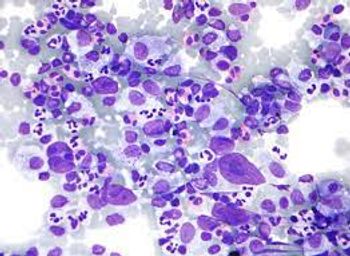
Updated safety and subgroup analyses appear consistent with previously reported results from the phase 2 ZUMA-12 study of Yescarta for patients with high-risk large B-cell lymphoma.

Recently approved by the FDA for chronic lymphocytic leukemia (CLL) or small lymphocytic lymphoma (SLL), Jaypirca “represents a meaningful advance” in treatment, as one expert explained.

Growing up in a dysfunctional family left the holidays with little to be desired.
Dr. Lucia Masarova sat down with CURE® and discussed the advancements she hopes to see in 2024 for the treatment of patients with myeloproliferative neoplasms.

The Food and Drug Administration has set priority review for Elahrere as use of treatment in patients with folate receptor alpha (FRα)-positive, platinum-resistant epithelial ovarian, fallopian tube, or primary peritoneal cancer.
A breast cancer survivor explains “one of the beautiful things” about antibody drug conjugates in the metastatic breast cancer space.
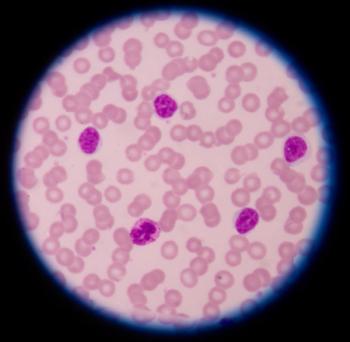
Children and adults with relapsed/refractory KMT2A rearranged acute leukemia may obtain promising response rates with revumenib, a novel targeted therapy.
Study findings support the use of a financial navigation program, in hopes of aiding patients with multiple myeloma affected by financial toxicity.

Could killing cancer be as simple as changing your diet?
A novel cell therapy demonstrated early efficacy and an acceptable safety profile in patients with graft-versus-host disease undergoing haploidentical stem cell transplantation.
Results from an ongoing phase 2 study show the viability for the use of Brukinsa after patients with previously treated B-cell malignancies are deemed intolerant to the next-generation Bruton tyrosine kinase inhibitor Calquence.
CURE® recently covered the San Antonio Breast Cancer Symposium. In case you missed it, here is some news that came out of the conference that patients should know about.

Researchers reported long-lasting responses and no new safety concerns in patients with relapsed/refractory follicular lymphoma during the 2023 ASH Annual Meeting and Exposition.
Where a patient lives may affect what kind of treatment they are offered for their CLL or SLL. However, second opinions and learning about one’s cancer diagnosis can help.

The three-year final analysis of efficacy and safety of the REACH3 trial showed that patients with steroid-refractory or dependent chronic graft-versus-host disease benefited more with Jakafi compared with the best available treatment.

One of my favorite songs really hit home after I was diagnosed with cancer.

There is hope with cancer! Do not let anyone tell you differently — even a physician.

Molecular minimal residual disease status may offer clues as to which patients with acute monocytic leukemia will benefit from certain therapies.

Autologous hematopoietic cell transplantation, compared with CAR-T cell therapy, resulted in lower rates of relapse and improved progression-free survival in patients with relapsed large B-cell lymphoma while they were in complete response.

The recent phase 3 TRANSFORM-1 study concluded that navitoclax combined with Jakafi showed significant spleen volume reductions in patients with myelofibrosis.