







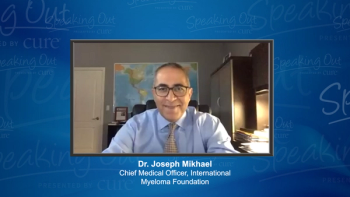
As a part of its “Speaking Out” video series, on behalf of the International Myeloma Foundation, CURE® spoke with their chief medical officer, Dr. Joseph Mikhael about disparities in the multiple myeloma space.
As a part of its “Speaking Out” video series, on behalf of the International Myeloma Foundation, CURE® spoke with their chief medical officer, Dr. Joseph Mikhael about disparities in the multiple myeloma space.
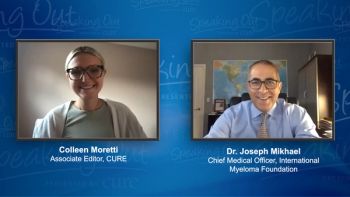
As a part of its “Speaking Out” video series, on behalf of the International Myeloma Foundation, CURE® spoke with their chief medical officer, Dr. Joseph Mikhael about the precursors to multiple myeloma, MGUS and smoldering myeloma.
As a part of its “Speaking Out” video series, on behalf of the International Myeloma Foundation, CURE® spoke with their chief medical officer, Dr. Joseph Mikhael about the risk of infection for patients with multiple myeloma.

CURE® surveyed its audience to see if cancer and the COVID-19 virus are changing their Thanksgiving plans. Here’s what they had to say.

As a recovering addict, I was nervous about the painkillers that would come alongside my cancer treatment, but I soon learned that they would be needed.

Though remission rates for children who underwent CAR-T cell therapy did not differ based on socioeconomic status, accessibility gaps remain.
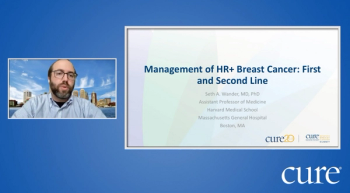
Watch Dr. Seth A. Wander, from Massachusetts General Hospital in Boston, discuss the first- and second-line treatment of hormone receptor-positive breast cancer, during the CURE® Educated Patient® Metastatic Breast Cancer Summit.

Think twice before telling me that there is a "good" type of cancer or that I should "just be lucky my daughter is still alive."

The recent FDA approval of Libtayo for advanced non-small cell lung cancer added yet another option for the treatment of patients with the disease.

When my wife surprised me with a prostate cancer awareness T-shirt, I realized that those small gestures matter the most.

From “Star Trek” actors supporting the Pancreatic Cancer Action Network to Michelle Obama meeting with a sarcoma survivor and an update on Jane Fonda’s cancer, here’s what’s happening in the cancer space this week.

Zolbetuximab plus the chemotherapy regimen mFOLFOX6 improved progression-free survival and overall survival in certain patients with unresectable or metastatic gastric or gastroesophageal junction adenocarcinoma.

An expert writes about his experience as a sarcoma medical oncologist and how the field may progress with several therapies in the pipeline.
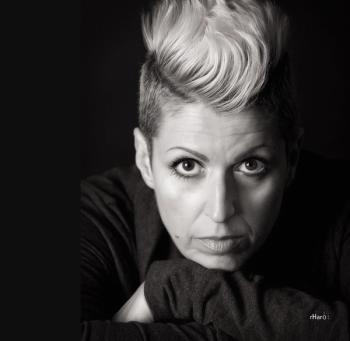
A 17-year survivor shares her experience of getting diagnosed with mesothelioma at 36, when people with this cancer are typically diagnosed at a much older age and given months to live.

As a cancer survivor, I can relate to the lyrics of the Beatles’ song, “Let it Be.”

Brandi Benson was thousands of miles away from home serving in the military when she received her cancer diagnosis. Today she advises others going through their own journey to not give up.

Tecvayli, which was recently approved for pretreated relapsed/refractory myeloma, is a “much more convenient” treatment option than CAR-T cell therapy, one expert said.

The first patient was enrolled in a phase 1 trial analyzing MTX110 in patients with recurrent glioblastoma, an aggressive type of brain cancer.

While most patients want to learn more about complementary therapies, like exercise and nutrition, before undergoing cancer treatment, barriers exist to both patients and clinicians, research found.

After being diagnosed with cancer 13 years ago, I began to wonder if my diet had anything to do with it — so I made some changes to eat better.

When patients are aware of cancer disparities, it can empower them to be proactive about their care to close the prognostic gap between races.


Being a creative, I learned to solve many of the problems that life threw my way. But being artistically gifted was worthless for dealing with the stark realities of my wife’s cancer.
From odor to diet concerns, a nurse practitioner answers common questions about colostomies and ileostomies from patients with cancer.

My family put off future plans because of my cancer, but now I’ve decided to take risks and do what we always hoped to accomplish.

The FDA approved Elahere for patients with pretreated, folate receptor alpha (FRα)-positive platinum-resistant gynecological cancers

Does lung cancer screening continue after a person is finished with treatment and moves in to the survivorship stage?
Patients with myelofibrosis should be open about their treatment goals with their providers, and potentially consider getting a second opinion or participating in a clinical trial, one expert says.

Identifying genetic mutations in lung cancer has allowed researchers to develop treatments that target specific biomarkers over the past 20 years, but more research is needed to further the space.

On a recent hiking trip, I first felt too hot with my homemade prostheses, but then self-conscious when I took them off.