Newly Discovered Biomarker May Help Personalize Colorectal Cancer Treatment
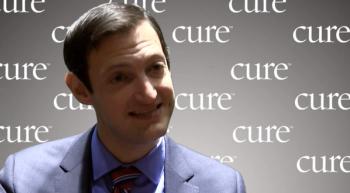
Researchers might be on to a new biomarker for patients with colorectal cancer, says Martin D. Berger, M.D., oncologist at the University of Southern California.

Researchers might be on to a new biomarker for patients with colorectal cancer, says Martin D. Berger, M.D., oncologist at the University of Southern California.

Gary A. Puckrein, Ph.D., president and CEO of the National Minority Quality Forum, says that cancer statistics are not the same across the nation.

Lauren Belive, Senior Federal Government Relations Manager at Lyft, discusses the company's Treatment Transport program.

Kathleen Gallagher, MPH, senior director of Health Services Research and Outcomes at the National Patient Advocate Foundation, discusses the importance of data sharing in advancing cancer care.

Beth Meagher, of Deloitte Consulting, discusses the importance of early cancer detection.

Lisa Richardson, M.D., M.P.H., director of the Centers for Disease Control and Prevention's (CDC) Division of Cancer Prevention and Control, discusses the CDC's role in the National Cancer Moonshot Initiative.

Patricia J. Goldsmith, CEO of CancerCare, discusses the importance of coordinating between health care professionals as a patient moves into survivorship and converts to treating cancer as a chronic illness.

Jeff Allen, president and CEO of Friends of Cancer Research, shares what he hopes continuing advancements and the Cancer Moonshot will achieve in cancer care.

Elizabeth Jaffee, M.D., deputy director of the Johns Hopkins Sidney Kimmel Cancer Center, discusses plans to maintain momentum on the Cancer Moonshot initiative.


Donna Cryer, CEO and president of the Global Liver Institute, discusses the importance of having diverse clinical trials in cancer care.

Syed Jafri, M.D., an assistant professor at the University of Texas McGovern School of Medicine, discusses the potential role that stress could play in lung cancer diagnoses.

Richard Boulay, M.D., chief of the division of Gynecologic Oncology at the Lehigh Valley Health Netowrk, tells the story of removing a 140-pound tumor from Mary Clancy. The tumor had been growing for at least 10 years when it was caught by a CAT scan, and was about half her body weight.

Jeffrey Holzbeierlein, M.D., University of Kansas Medical Center, discusses how important it was that a multidisciplinary team came together to create the non-metastatic muscle-invasive bladder cancer guidelines.

Jonathan E. Rosenberg, M.D., medical oncologist at Memorial Sloan Kettering Cancer Center, discusses the new treatment guidelines for patients with non-metastatic muscle invasive bladder cancer.

NFL player and founder of the Chris Draft Family Foundation, Chris Draft, explains what caregivers need to know.

Ramy Ibrahim, M.D., vice president of Clinical Development at the Parker Institute for Cancer Immunotherapy discusses how the institute's mission aligns with the mission of the Cancer Moonshot.

Sandra Allen-Bard, MSN, ANCC, AOCNP, of Weill Cornell Medical Center, discusses the impact myeloproliferative neoplasms can have on patients' quality of life.

Fay Hlubocky, Ph.D., M.A., University of Chicago Medicine, discusses the challenges that women with ovarian cancer face that may be different than those diagnosed with other cancers.

Greg Simon, CEO of the Biden Cancer Initiative, discusses the transition from the Cancer Moonshot Initiative to the Biden Cancer Initiative.

Mindy Mintz Mordecai, founder, president, and CEO of the Esophageal Cancer Action Network (ECAN), discusses the link between acid reflux and esophageal cancer.

Diane Zipursky Quale, co-founder of the Bladder Cancer Advocacy Network, discusses the importance of patients discussing their treatment options with their physician before undergoing surgery.

Audra Moran, CEO & President of the Ovarian Cancer Research Fund Alliance discusses the Ovarian Cancer National Conference.

David Gershenson, M.D., of MD Anderson Cancer Center, explains the difficulty of advancing treatment of rare ovarian cancers: malignant ovarian germ cell tumors, sex cord stromal tumors, and types of epithelial tumors such as ovarian clear cell carcinoma, ovarian low-grade serous carcinoma, and mucinous tumors.

Sarah Sciortino, MSW, LSW, Oncology Psychosocial Support Services Program Coordinator at University of Chicago Hospital, discusses the unique concerns that younger patients with ovarian cancer can face.

Mark Gibbons of Caregiver Action Network discusses the emotions caregivers to patients with ovarian cancer may have.

Nita Karnik Lee, MD, MPH, of The University of Chicago Medicine, discusses what patients with ovarian cancer should know about when entering survivorship.

Jennifer Lane-Riefler, MCHES, CFm, Executive Director of Cancer Services of Grant County, discusses the financial assistance opportunities available for patients with ovarian cancer.

Rami S. Komrokji, M.D., clinical director of Hematologic Malignancies at Moffitt Cancer Center, discusses an unmet need in the treatment of myelodysplastic syndrome (MDS).