








The priority review will focus on Opdivo with chemotherapy for the treatment several gastrointestinal cancers, which has recently become a rising area in novel treatment development.
The priority review will focus on Opdivo with chemotherapy for the treatment several gastrointestinal cancers, which has recently become a rising area in novel treatment development.

The combination of Inlyta (axitinib) and the synthetic hormone octreotide acetate failed to significantly improve progression-free survival, compared to placebo with the synthetic hormone. However, the results indicated the Inlyta-based combination did improve disease response in patients versus the placebo-based combination.

In the final analysis of the phase 2 TASCO1 trial, patients within the Lonsurf and Avastin arm reached a median overall survival of 22.31 months compared with 17.67 months in the Xeloda and Avastin arm.

“This is the longest survival seen in a phase 3 study of advanced liver cancer,” lead study author Dr. Richard S. Finn, of the UCLA Jonsson Comprehensive Cancer Center, said in a virtual presentation of the data.

The balancing act of being a caregiver and parent simultaneously is one that requires acceptance and fierceness.

The data in the study presented at the ASCO Gastrointestinal Cancers Symposium demonstrated that while rare, stage 4 gastrointestinal stromal tumors often spread to the liver.

A group of patients with gastrointestinal cancers reported that a novel artificial intelligence-based search tool made it easier for them to find and understand cancer clinical trials. The tool, according to study authors, would not only help with trial accrual, but could also help improve trial diversity.
The Food and Drug Administration has had a busy winter so far, approving several new agents to treat a variety of cancers. Here are seven recent approvals that patients with cancer may have missed.

As a cancer survivor, I’ve found many reasons to celebrate. Here’s one more.

In an interview, Dr. Matthew Davids of the Dana-Farber Cancer Institute discusses the future of CAR T-Cell therapy in the treatment of younger patients with chronic lymphocytic leukemia.

Caregiving for a patient with cancer is an ongoing journey that also requires the caregiver to learn along the way. One couple discusses that process and more.

The Breast Cancer Recurrence Project aims to revolutionize and bring accuracy to what we know about who’s living with metastatic breast cancer.

The researchers concluded that the overall low health-related quality of life scores for young CRC survivors in the categories of social and functional well-being should be targeted by appropriate methods, which could include counseling and quality of life interventions.

It’s okay for me to not feel like celebrating my 5-year cancerversary in a world that is upside down and backward because of COVID-19. Yes, I’m grateful and blessed, but I’m not bullet-proof. I’m human. I don’t have to feel guilty. None of us do.

In an interview with CURE®, expert Martha Raymond explains the importance of clinical trials during the COVID-19 pandemic and how clinicians must find a way to help ease patients anxieties as they return to the clinic.

In a recent interview with CURE®, a medical oncologist from the Dana-Farber Cancer Institute discussed why it’s important for patients with CLL, regardless of their treatment plans, to keep up on vaccinations and maintain a regular cancer screening schedule.

The Food and Drug Administration approved Enhertu to treat adults with locally advanced or metastatic HER2-positive gastroesophageal or gastric cancer who have previously received a trastuzumab-based treatment regimen.

The digital program, which provides patients with cancer access to cognitive behavioral therapy and relaxation therapy, has been accessed by approximately 12,000 people across the United States since it launched in 2020.

From an oncologist forgiving the medical debt of 200 of his patients to “Saved by the Bell” Star Dustin Diamond being diagnosed with stage 4 cancer, here’s what’s happening in the cancer landscape this week.
Janice and Rex Cowden sat down for an interview to discuss how to navigate a cancer diagnosis as a couple, and that communication is not only the key to a better cancer journey but a better marriage.
The Food and Drug Administration approved the supplemental new drug application for Xalkori (crizotinib) to treat children and young adults between the ages of 1 and 21 with relapsed or refractory, systemic ALK-positive anaplastic large cell lymphoma.

Patients with hepatocellular carcinoma who live in low-income and rural households are less likely to receive high quality care and therefore are more likely to be diagnosed with an advanced stage cancer.

Quality of life improved in patients treated with Darzalex, Revlimid and dexamethasone compared with Revlimid and dexamethasone, and were present regardless of age, functional status and the depth of their treatment response.

The other half of the Siegfried and Roy duo famous for their Vegas act died on Thursday from terminal pancreatic cancer.

A survivor discusses the challenges of finding connections during COVID-19.

In this episode of the “CURE Talks Cancer” podcast, we spoke with someone who has undergone 41 surgeries and physically debilitating treatments during his more than 15-year journey with several cases of skin cancer. We discussed his cancer journey, and why, as he starts a new treatment after his most prior therapy failed, he’s focused on quality rather than quantity of life.

In a recent interview with CURE®, a medical oncologist from the Dana-Farber Cancer Institute in Boston discussed how the addition of Copiktra to a three-drug chemotherapy combination improved outcomes in patients with CLL, with more than half achieving complete remission.
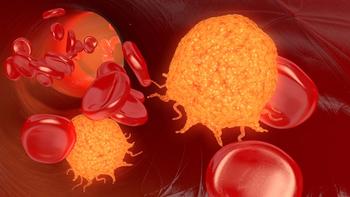
Melflufen with dexamethasone was an effective treatment option for patients with relapsed or refractory multiple myeloma previously treated with a specific chemotherapy drug and/or an anti-CD38 monoclonal antibody.
Patients with ALK-positive non-small-cell lung cancer who received Lorbrena reported better quality of life and had longer progression-free survival than patients who received Xalkori.

A cancer survivor discusses how she decides to discuss her mastectomy and the acceptance of her body after treatment for cancer.