




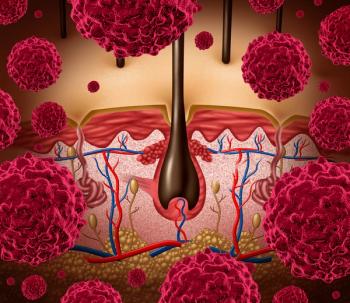
The goal of the phase 2 trial is to study the safety and efficacy of ASP-1929, a photoimmunotherapy with fluorescence imaging, in patients with head and neck or skin cancer.
The goal of the phase 2 trial is to study the safety and efficacy of ASP-1929, a photoimmunotherapy with fluorescence imaging, in patients with head and neck or skin cancer.

Treatment with Cabometyx before surgery in patients with advanced renal cell carcinoma, a type of kidney cancer, may provide benefits, although further research is required before a decision is made about its role in presurgical treatment.

Facing cancer can be perplexing for some men as many of us were raised within the “boys don’t cry” ilk, but I want to remind everyone that it’s OK to feel emotions.

Although the data failed to identify a predictive biomarker in patients with advanced kidney cancer, an expert from Memorial Sloan Kettering Cancer Center in New York notes that the results indicate that no one should be excluded from receiving Lenvima plus Keytruda.

Tecentriq failed to meet the progression-free survival goal in a trial analyzing the immunotherapy agent in advanced squamous cell carcinoma of the penis.
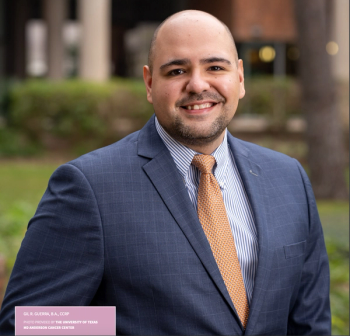
"Because of his supportive rapport with his patients, his name often has come up in our local support group, resulting in everyone wishing they had 'a Gil,'" a cancer survivor wrote of a clinical trial research nurse.

Patients with nonmetastatic castration-resistant prostate cancer who were taking other medications or had health complications still derived a survival benefit from treatment with Nubeqa, research showed.

A look at a survivor's survivorship appointment and how being a “patient patient” helps tackle anxiety.
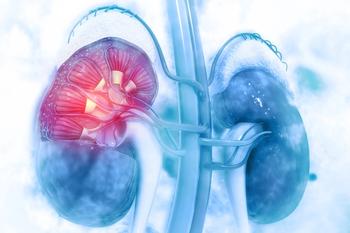
Fotivda – a TKI drug that was approved last year – not only improved survival outcomes, but was also very tolerable in terms of side effects for patients with metastatic renal cell carcinoma.

New research has demonstrated that treatment with Rozlytrek induced meaningful responses in patients with NTRK fusion-positive solid tumors and may also effectively treat brain metastases in those patients.

Although my daughter’s cancer scans currently show no evidence of disease, I am haunted by the fact that there is always a possibility it could return and uproot our lives yet again.

I think all of us feel abandoned somewhat when we lose an oncologist, and other cancer survivors have expressed these same emotions to me. But I have to realize that a piece of her will always be with me until the day I pass.
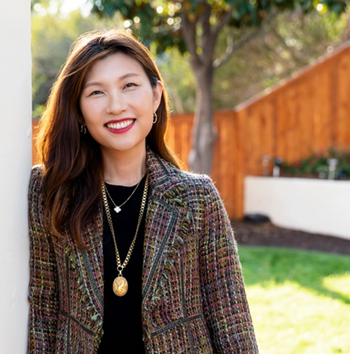
A woman with metastatic breast cancer pens a heartfelt tribute to the oncologist who saved her life and approached her care with empathy and encouragement.

A colleague recognizes the generosity, humility and grace of a metastatic breast cancer expert who has led many practice-changing trials and programs to help as many patients as she can.
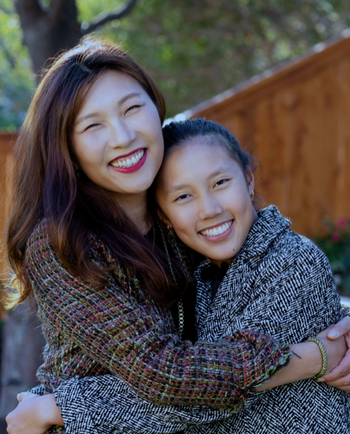
When I first learned about my mom’s breast cancer, I was just a toddler — but thanks to her incredible oncologist, my mom is here to see to me grow up.

CURE® asked its readers to share their difficulties eating after cancer, and what they did to help combat those challenges.

After reaching the point where anxiety was completely overwhelming my system before getting routine cancer scans, I decided to try a new approach suggested by my therapist to ease my worries.

From NBC4 meteorologist Bob Nunnally’s break for cancer treatments to Mary J. Blige’s Super Bowl commercial encouraging others to undergo cancer screenings, here’s what’s happening in the cancer landscape this week.
An oncologist from Johns Hopkins Medicine outlines why the Centers for Disease Control and Prevention changed its masking guidance in 2022, and why high-quality masks are particularly important for patients with cancer.
A trial to examine BMF-219 in patients with relapsed or refractory acute leukemias has begun recruiting patients across multiple U.S. states.

The Food and Drug Administration will review data on Breyanzi (lisocabtagene maraleucel) — a CAR-T cell therapy — for use in the second-line setting for patients with relapsed or refractory large B-cell lymphoma to determine if the indication will be granted approval.

Having been a caregiver to my late husband who died from cancer, I know first-hand the difficulties of caregiving — not to mention what it must be like for those trying to do it during a worldwide pandemic.
In this episode of the “Cancer Horizons” podcast, the founder of Jack’s Caregiver Coalition, a nonprofit organization dedicated to supporting men throughout the caregiving experience, explores the layered sociological factors which can affect men in unique ways when they are supporting a loved one with cancer.
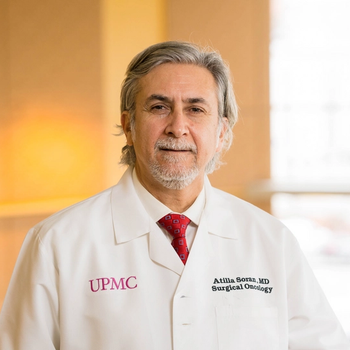
A surgical oncologist honors an admirable doctor in the field who refuses to falter in the face of challenges in order to do exhaust every opportunity possible to improve the lives of patients with metastatic breast cancer.
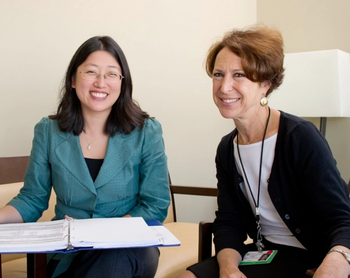
A woman with breast cancer honors a colleague for her inspirational work to better the lives of patients with metastatic breast cancer, mentor others and inspire meaningful change.

A large study of women with HER2-negative breast cancer showed that daily aspirin use had no effect on breast cancer outcomes.

In the midst of my treatment for mantle cell lymphoma, I had to suffer through the feeling of wanting to crawl out of my own skin when my oncologist gave me a medication tapering plan that was not gradual enough.

At a 30-month follow-up, patients with renal cell carcinoma — which is the most common type of kidney cancer — who underwent nephrectomy continued to benefit from Keytruda after the surgical removal of the affected kidney.
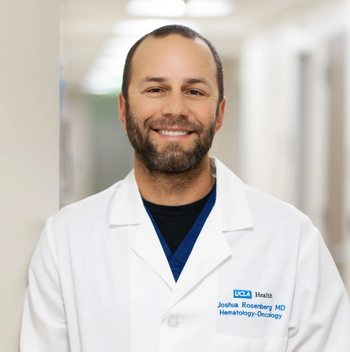
I feared that switching to a new oncologist after mine retired would be awkward but having Dr. Joshua D. Rosenberg treat my metastatic breast cancer has left me with the deepest gratitude.

Patients with cancer who receive bone marrow or stem cells from either a related or unrelated donor may experience similar outcomes and quality of life post transplant, which may highlight the efforts made by teams to help patients along the way.