








In honor of Adolescent and Young Adult (AYA) Cancer Awareness Week, CURE® compiled some recent news and updates from this field that patients, survivors and caregivers may have missed.
In honor of Adolescent and Young Adult (AYA) Cancer Awareness Week, CURE® compiled some recent news and updates from this field that patients, survivors and caregivers may have missed.

Approximately one year after granting Trodelvy accelerated approval, the Food and Drug Administration granted a regular approval to the antibody-drug conjugate in certain patients with pretreated triple-negative breast cancer.

Men with breast cancer who were treated with Soltamox plus gonadotropin-releasing hormone analogue had a decrease in estradiol levels of 85%, whereas Aromasin plus gonadotropin-releasing hormone analogue reduced these levels by 72%.

Survivor’s guilt is not just felt by individuals who overcome a deadly disease like cancer, writes a cancer caregiver. She explains how she has experienced it too but knows that not all caregivers are as lucky as her.
A once-every-two-week regimen of Erbitux has been approved by the FDA, which provides patients with KRAS wild-type, EGFR-expressing colorectal cancer or squamous cell carcinoma of the head and neck another treatment option.

In an interview, Dr. Andrew Yee of Massachusetts General Hospital discusses how a multiple myeloma diagnosis affects a patient’s life and how hopeful he is about helping them lead normal lives.

While it may not be the first thing patients think of when diagnosed with cancer, appropriate clothing centered around treatment can help ease their overall experience, according to an expert.

Sorting out symptoms as survivors age can be challenging, writes a cancer survivor. She notes that survivors have special needs that they need to be aware of to make the most of their “new normal.”

Early findings show that glofitamab may be a safe and effective option for patients with pretreated, relapsed/refractory B-cell non-Hodgkin lymphoma.

Pirtobrutinib was safe and effective in treating patients with chronic lymphocytic leukemia, small lymphocytic lymphoma, mantle cell lymphoma and Waldenstrom macroglobulinemia, some of whom developed intolerance or resistance to previous covalent BTK inhibitors.
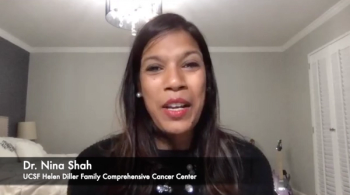
In an interview, Dr. Nina Shah of UCSF Helen Diller Family Comprehensive Cancer Center explains what a myeloma millennial, or ‘myelennial,’ is, and how recent advances in multiple myeloma treatments inspired the term.

On social media, CURE® recently asked its readers to share if they have experienced any side effects from cancer treatment and how they have managed them. Here’s what some of them said.

It makes sense to take stock of cancer treatment — its physical, emotional, and spiritual cost, and what people want out of life going forward. Here, a patient with cancer writes how It’s OK to say, “Cancer treatment sucks and I hate it, even when the big prize, our buddy NED, has taken up residence in our bodies.”

Childhood cancer survivors are at a higher risk of pain and associated functional impairments later in life, study results show. These results, according to experts, highlight the need for routine pain screening in survivors.

Patients with platinum-sensitive relapsed ovarian cancer who underwent surgery then chemotherapy had a progression-free survival of 17.4 months compared with 11.9 months in those who underwent chemotherapy alone.

A “thriver” of triple-negative breast cancer shares a poem to mark the 10th anniversary of her survivorship.

The Food and Drug Administration’s Oncologic Drugs Advisory Committee unanimously voted in favor of waiting for more data before making an approval decision involving the use of Keytruda in early triple-negative breast cancer.

A person with metastatic breast cancer writes about how she just wants to be “normal” again and for people to stop pitying her.

CURE® compiled a roundup of seven recent pieces of COVID-19 news and updates that patients with cancer may have missed.

Previously, Vidaza alone showed poor response rates for patients with TP53-mutated, myelodysplastic syndromes and acute myeloid leukemia, but adding the novel agent eprenetapopt improved response rates and overall survival in this patient population.

At four-year follow up, treatment with givinostat, a histone-deacetylase inhibitor, continued to be safe and effective with no serious or life-threatening side effects.

A cancer survivor writes about all the little things she has missed because of the COVID-19 pandemic. Those little things — such as going to a diner and connecting with friends — are now appreciated more than we ever would have imagined, she writes.

From the death of Paralympic champion snowboarder Bibian Mentel to Baltimore Orioles first baseman Trey Mancini successfully completing treatment for colon cancer, here’s what’s happening in the cancer landscape this week.

Polymerase (PARP) inhibitors continue to improve progression-free survival over placebo in women with recurrent, platinum-sensitive ovarian cancer.

The biggest fear for many patients, according to an expert from The University of Texas MD Anderson Cancer Center, is when they hear that myeloma, for most patients, is not curable. However, she notes that every few years patient survival is increasing.

CURE spoke with a cancer rights attorney about what financial toxicity is and ways to address this burden before assistance is needed.

What happens when health is affected by an unexpected illness such as cancer? Does their quality-of-life decline? Here, one survivor writes how she used the gift of recording the details of her journey to better her life after a cancer diagnosis.

Dr. John Marshall and his wife, Liza, look back on the trials and tribulations of Liza’s triple-negative breast cancer diagnosis – from the perspective of a patient and her husband, the caregiver and oncologist.

Each month, we take a look back at the most popular CURE® stories. Here are the top five stories for March 2021.

“This approval is an important advancement for patients whose disease has relapsed and reinforces the potential for Sarclisa to become a standard of care in relapsed or refractory multiple myeloma,” said Dr. Thomas G. Martin.