






On social media, CURE® recently asked its readers to share how they cope with anxiety leading up to their next scans. Here, we share some of their responses.
On social media, CURE® recently asked its readers to share how they cope with anxiety leading up to their next scans. Here, we share some of their responses.

My care team and I are focused on keeping me alive. And learning to lead them, especially with me having limited medical knowledge, has been essential to helping them keep me alive.

The liquid biopsy test was also approved as a companion diagnostic test to uncover EGFR mutations in patients with NSCLC who could benefit from treatment with Tagrisso.
After a traumatic event, such as breast cancer, it's important for a person to self-monitor. Feelings of anxiety or depression can be debilitating, but there's no reason to suffer in silence.
That sinking feeling in the pit of your stomach is familiar to those who have heard the words "you have cancer". Telling someone not to worry post treatment can be like telling them to not breathe. Listening is more productive than telling survivors not to worry.

Patient navigators are the vaunted “healthcare emissaries” for patients with breast cancer and can help navigate their journey a great deal. In this conversation from the Susan G. Komen Greater New York City “Empowering and Mobilizing Our Patient Navigation Workforce” virtual conference experts highlight the results of a survey of patient navigators.

WellBe, a new voice-enabled virtual assistant, can remind patients with cancer to take their medication and keep them on track from the comfort of their own home.
Although I was never a member of a sorority in the traditional sense, having breast cancer has put me into a sorority of women (and a few men) and created lifelong freidnships.

From the recent discovery of osteosarcoma in a dinosaur bone to NFL player Nate Solder opting out of the upcoming season for health concerns, here’s what’s making headlines in the cancer space this week.
On the Today Show, Scott Hamilton share's his cancer story and also gives a look at his book "Frtizy Finda A Hat", a children's book to help parents talk about cancer with their kids.

The FDA based its decision on data from a phase 2 trial which showed that MK-6482 induced clinical responses among patients with von Hippel-Lindau disease-associated kidney cancer.
Survey includes new data illustrating cancer patients’ mindsets during and after treatment.

While the combination of Opdivo and Yervoy is one of several treatment options for patients with metastatic renal cell carcinoma, many patients will likely progress after initial treatment. However, new research shows that when used after immune checkpoint inhibition, the combination shows promise.
A two-time cancer survivor notes that although long-term cancer side effects can pile up, many are manageable.

This healthy faux-ice cream recipe from the oncology dietitians at the John Theurer Cancer Center will be sure to provide our readers with some much-needed relief from the summer heat.
The Food and Drug Administration approved Blenrep to treat patients with relapsed/refractory multiple myeloma.

Dr. Othman Al-Sawaf discusses the encouraging long-term data that makes the Venclexta-Gazyva combination a viable treatment option for patients with CLL.
Even though I knew I was eligible for COBRA and that it would come into effect soon, my anxiety soared and grew as the days progressed. I told anybody who would listen that a cancer survivor in the time of COVID cannot be without insurance for even a second.
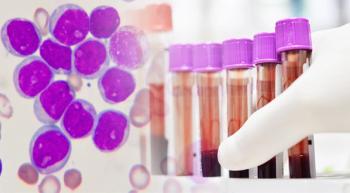
“Final results from ASCEND confirm the findings of the interim analysis and support the favorable efficacy and safety of (Calquence) versus standard-of-care regimens in relapsed or refractory CLL,” said Dr. Paolo Ghia.
The FDA’s fast track designation for BST-236 to treat adults aged 75 years or older with acute myeloid leukemia, or who have comorbidities that prevent the use of intensive induction chemotherapy, may open the doors to an accelerated approval.
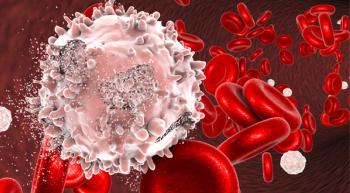
A clinical trial of Brukinsa (zanubrutinib) is open to patients with B-cell blood cancers and will determine whether the side effects re-emerge with Brukinsa.

“The FDA approval of (Tecartus) will change the way we treat patients with relapsed MCL forever and for the better,” said Dr. Michael Wang.
A colon cancer survivor reflects on receiving her first diagnosis as a high school student, and offers current students whose academic careers have been altered by COVID-19 some advice on how they'll get through the missed experiences.

A patient assessment tool, known as the Functional Assessment of Cancer Therapy–Leukemia (FACT-Leu), was a viable and valid outcome measure for patients with acute myeloid leukemia not eligible for intensive therapy.
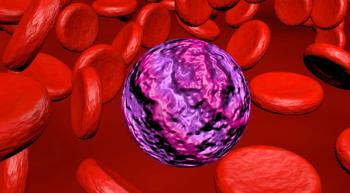
“Overall, the take-home point is that it's a small study so far and the follow-up time is still short, but it is pretty exciting preliminary data,” said Dr. Courtney DiNardo about the combination of Tibsovo plus Venclexta – with or without Vidaza – in IDH1-mutated acute myeloid leukemia.

On social media, CURE® recently asked its readers to share the advice they would give someone looking to help a friend or loved one with cancer. Here, we share some of their responses.

A roundup of the latest news and updates for patients with ovarian cancer from CURE®.
An 11-year survivor of inflammatory breast cancer details how even though she considers herself one of the lucky ones, the awareness that “as far as we know” could change in one blinding moment still haunts her.
The Food and Drug Administration has had a busy summer, approving new agents to treat a variety of cancers. Here are five recent approvals that patients with cancer may have missed.

Each month, we take a look back at the most popular CURE® stories. Here are the top five stories for July 2020.