






Adam Brufsky, M.D., Ph.D. discussed treatments for BRCA-positive breast cancer at the 2019 Miami Breast Cancer Conference.
Adam Brufsky, M.D., Ph.D. discussed treatments for BRCA-positive breast cancer at the 2019 Miami Breast Cancer Conference.

"How worried 'should' I be?", ponders one cancer survivor.

Lenvima (lenvatinib) in combination with weekly paclitaxel induced activity among those with recurrent endometrial and platinum-resistant epithelial ovarian cancer, according to results from a phase I study.

A hospital whose mission is to cure children’s catastrophic diseases is not only providing treatment, but also conducting research and making new medicines. Now, in addition to improving its patient-care and research capabilities, it plans to reach into low-income countries to help cure more children with cancer.
Anemia is so intertwined with cancer that every current patient and survivor should know about it.

During the 2019 Miami Breast Cancer Conference, an expert discussed financial toxicity and the role of healthcare providers in addressing the cost of care with their patients.
Fourth-generation, family-owned egg and feed farm joins local cycling event to achieve Victory Over Cancer®.

Treatment with the combination of Keytruda (pembrolizumab), Avastin (bevacizumab) and metronomic cyclophosphamide appeared safe and effective in women with recurrent epithelial ovarian cancer, according to results from an open-label phase 2 study.
How to build good self-care habits for a better life with cancer.
Immune checkpoint inhibitors were generally well tolerated and may be a viable treatment option for patients with HIV infection and advanced-stage cancer.
Team V raises thousands to support cancer research.

The Food and Drug Administration (FDA) has granted an approval to the combination of Tecentriq (atezolizumab) with carboplatin and etoposide for the frontline treatment of patients with extensive-stage small cell lung cancer (ES-SCLC).
On March 9th , CURE® held the first patient portion of the 36th Annual Miami Breast Cancer Conference and I was gratefully in attendance.
Breast cancer is no laughing matter, but being able to find something to laugh about in the midst of the trial can be cathartic.
Combining two immunotherapies known as checkpoint inhibitors along with best supportive care prolonged life by two and a half months in patients with advanced colorectal cancer that resisted previous treatments.

Prior exposure to PARP inhibitor treatment may not lead to resistance in future use with these agents in women with recurrent epithelial ovarian cancer, meaning repeat use could become more common.

Side effects decreased among patients with high-risk ovarian cancer who received an individualized starting dose of Zejula (niraparib), based upon baseline bodyweight and platelet counts, compared with a fixed starting dose.

Patients with recurrent ovarian cancer who received Zejula (niraparib) maintenance therapy experienced longer progression-free survival, as well as more time without symptoms or toxicity compared with placebo, according to results from the phase 3 ENGOT-OV16/NOVA trial.
Of all the things that cancer left me with, scarred veins in my only good arm has been the worst. I have learned to treasure those techs who can find a good vein and hit it the first time.

The importance of teamwork between patients and their caregivers was a common theme at the second annual Ovarian Cancer Heroes event held in Honolulu, Hawaii.

The Childhood Solid Tumor Network at St. Jude is helping scientists inside and outside the hospital’s walls to expand treatment options for youngsters with these cancers.
A caregiver's view on why this bill needs careful consideration.

From FDA news to today’s top performers and entertainers, here’s what’s making headlines in the cancer space this week.
One is meant to improve quality of life and the other is meant to care for end-of-life. Yet the two specialties of palliative and hospice care still continue to be confused not only by the patient, but also the provider.

While it is an exciting time for the treatment of mantle cell lymphoma (MCL), challenges still remain, according to Andre Goy, M.D., MS.

With the evolving landscape of maintenance therapies to treat patients with lymphoma following auto-HCT, a panel consensus recommended four grade A options for physicians to utilize.
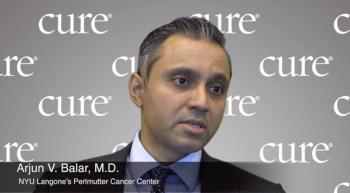
An expert discusses the future of immunotherapy in light of new frontline treatments like Keytruda that have been demonstrating positive results for patients with non–muscle invasive bladder cancer.
Every person handles a cancer diagnosis differently. The most important thing is that you say or do something. Here are three suggestions you may find helpful based on my experience.
Connect yourself to items that can help you through your cancer journey.

A cancer gene panel using blood may be a cost-effective way of testing the quantity of mutations found in tumors of patients with non-small cell lung cancer.