





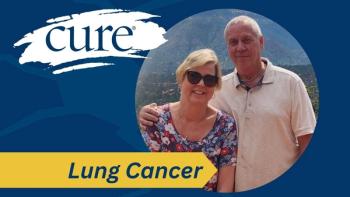
Wendy Brooks, a survivor of extensive-stage small cell lung cancer, and her husband and care partner, Larry Brooks, highlight the role of self-advocacy.
Wendy Brooks, a survivor of extensive-stage small cell lung cancer, and her husband and care partner, Larry Brooks, highlight the role of self-advocacy.

The NCCN hosted a Patient Advocacy Summit to address elevated cancer risks and specific healthcare needs of veterans and first responders.

Early trial data suggest Olvi-Vec may shrink or control cancer after platinum therapy, with safety signals in small cell and non-small cell lung cancer.
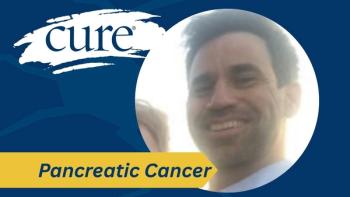
Dan, a pancreatic cancer survivor and advocate, shared insights on participating in clinical trials and the importance of self-advocacy.
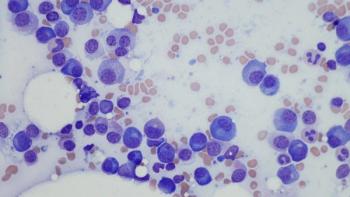
Living with an incurable cancer that resists durable remission means holding hope and grief at the same time — existing between promising data and lived experience.

I share how ikebana, silence and intentional space have helped me live with chronic leukemia, anxiety and uncertainty between appointments.

Your educational guide during a colon cancer diagnosis, including what to expect for screening, staging, treatments and managing side effects.

Education is a vital step in navigating gallbladder cancer care.

The FDA approved six new therapies for blood, prostate and lung cancers and supportive care, expanding treatment options based on recent trials.
An expert discusses how precision oncology, immunotherapy, biomarker testing and clinical trials are expanding treatment options for patients with gastric cancer.

Breast cancer survivors who continue to deal with high-risk factors in a remaining breast need to be proactive about medical protocols that fit a high-risk survivor’s needs.

Five years after finishing treatment for follicular lymphoma, I reflect on remission, scanxiety, life changes, and the joys and challenges of recovery.

Dr. Suzanne George sat down with CURE for an interview to discuss the ongoing phase 1/2 DCC-3009 study in advanced gastrointestinal stromal tumor.

Subgroup analysis of the phase 3 FOCUS study of patients with uveal melanoma has been announced.

I share how an overlooked symptom led to my anal cancer diagnosis and why speaking openly about risks, stigma and symptoms can help others seek care sooner.

Triage Cancer is excited to announce our 2026 Webinar Series, a free lineup of expert-led programs

My initial reaction was fear: Fear of the unknown possibilities of what could happen as a result of this most dreaded diagnosis.
The EVEREST-2 study has reported the first complete response to CAR-T cell therapy in a patient with non-small cell lung cancer.

I reflect on caregiving, loss and gratitude, honoring the people who supported me through my sister’s cancer and my first Thanksgiving without her.
CURE spoke with Dr. Natalie S. Berger for the latest episode of the "Cancer Horizons" podcast.
Early-phase studies showed INCA033989 led to spleen reduction, symptom improvement and anemia responses in patients with calreticulin-mutated myelofibrosis.
Rusfertide keeps hematocrit under 45% and prevents phlebotomy for most patients with polycythemia vera through 52 weeks of treatment.

Updated VIKTORIA-1 data show gedatolisib plus Faslodex, with or without Ibrance, improves progression-free survival in PIK3CA wild-type advanced breast cancer.

Cancer survivorship invites deeper questions about what we allow into our bodies, our homes, and the lives of those we love most.
CURE spoke with an expert about smoking-related stigmas often faced by patients with lung cancer.

Piqray plus Faslodex improved progression-free survival versus Faslodex alone in CDK4/6 inhibitor–pretreated, PIK3CA-mutated advanced breast cancer.

Dr. Roshani Patel answers questions from patients with breast cancer on Keytruda-induced colitis, sugar intake during chemo, and how to stay active.
Oya Gilbert, diagnosed with multiple myeloma in 2017, advises patients to bring someone to appointments, ask questions and seek second opinions.

Orserdu plus Verzenio or Afinitor was well tolerated and showed early signs of effectiveness in advanced ER-positive, HER2-negative breast cancer.
CURE spoke with an expert about why a support system is crucial for patients with lung cancer.