

Rachel J. Wong, an oncology dietitian from Georgetown Lombardi Comprehensive Cancer Center, has some helpful tips on what patients and survivors can stock their pantry with to avoid stress eating and stay healthy through the pandemic and beyond.
Rachel J. Wong, an oncology dietitian from Georgetown Lombardi Comprehensive Cancer Center, has some helpful tips on what patients and survivors can stock their pantry with to avoid stress eating and stay healthy through the pandemic and beyond.

Data presented at the ASCO 2020 Virtual Scientific Program demonstrated that Keytruda was an effective treatment for patients with Hodgkin Lymphoma and side effects were tolerable.

Being a young adult with cancer can feel like an isolating journey, but "Survivor: Africa" winner Ethan Zohn details how a community can form even in the unlikeliest of places.

The role of exercise in the cancer journey can provide its own form of medicine, explains one expert in an interview with CURE.

In an interview with CURE, “Survivor: Africa” winner Ethan Zohn talks about how his cancer journey changed his perspective on life and helps him to navigate the COVID-19 pandemic.

Dr. Nirav Niranjan Shah explains the data behind why autologous stem cell transplant should remain the standard of care for patients with relapsed chemo-sensitive DLBCL.

Former Survivor competitor, and winner, Ethan Zohn talks with CURE about his journey with cancer and raising awareness for patients with leukemia and lymphoma.

For patients with cancer and survivors getting out to get the groceries becomes a tougher chore during a pandemic, but according to this oncology dietician you can find certain foods that will last on your shelf and keep you healthy.
CURE hosted its second webinar that will focus on all the latest topics and trends for patients with lung cancer.

“This is the first randomized trial to demonstrate an overall survival benefit for patients with brain metastases, which I think is very significant,” said Dr. Nancy U. Lin.

While follow-up data on the BEACON CRC study demonstrated superior overall survival for certain patients with metastatic colorectal cancer receiving Braftovi, Mektovi and Erbitux, an exploratory analysis is needed to understand if this treatment can impact a wider subset of patients.

The HIF-2a Inhibitor induced clinical responses among patients with von Hippel-Lindau disease–associated kidney cancer, according to results presented at the 2020 ASCO Virtual Scientific Program.

“We now have second and third generation cousins of thalidomide that are very useful. So, lenalidomide in combination with rituximab is an effective therapy for mantle cell lymphoma that voids some of these adverse events that I’m talking about,” said Dr. Ian Flinn. Hear more about this treatment in his interview with CURE®.

“I think we’re in a midst of a real shakeup in our treatment paradigms for patients with mantle cell lymphoma, or at least we will be in the next few years,” said Dr. Ian Flinn in an interview with CURE®.
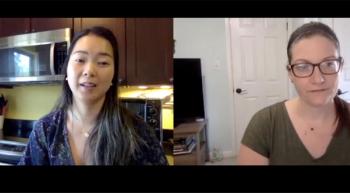
One oncology dietitian shares her expertise with patients and survivors of cancer on how to maximize their trip to the grocery store by planning their meals ahead of time.

The development of bispecific antibodies and antibody drug conjugates could be exciting advancements for patients with lymphomas, including mantle cell lymphoma, according to Dr. Ian Flinn.

Evidence shows that Bruton’s tyrosine kinase inhibitors, one of many targeted therapies, are highly effective in patients with mantle cell lymphoma.
CURE hosted its first webinar, focused on all the latest topics and trends for patients with lung cancer.

The evolution of CAR T-cell therapy has been an exciting development for the treatment of all lymphomas, including mantle cell lymphoma, according to Dr. Ian Flinn.

Caregivers are an essential part of any patient or survivor’s cancer journey and social distancing due to COVID-19 has made the challenges of caregiving even more difficult. However, one expert details how caregivers can still stay connected during the pandemic.

“For the patients that are nervous about how this is going to end, or what's going to happen, I would say that that's true for them outside of the COVID crisis because that's the same question they have about their cancer,” Dr. Scott A. Irwin said.
As stress and anxiety have increased during the COVID-19 pandemic, one expert notes how it’s important for patients with cancer to pay attention to their mental health.

Even amid stay at home orders to mitigate the spread of the coronavirus, listen to your body and speak to your healthcare professionals when you are worried about a potential for cancer.

As millions of people face a “new normal” during the COVID-19 pandemic, patients with cancer can teach others about the resilience needed to face the unknown.

COVID-19 has drastically changed the landscape for patients with bladder cancer, but the new challenges are not insurmountable. CURE had the chance to interview the co-founder of the Bladder Cancer Advocacy Network to discuss these changes.

Although one non-profit has decided to place fundraising efforts on the back burner since the start of COVID-19, one of the organization’s founding members notes it is still sticking to its mission.

There's a lot of rapidly changing information on COVID-19 and patients need to take their time and find the facts that matter.

Amid the COVID-19 pandemic, the Bladder Cancer Advocacy Network is honoring Bladder Cancer Awareness Month in a slightly different way from previous years.

As the COVID-19 pandemic continues to impact the country, patients with breast cancer who were scheduled to have reconstructive surgery, or were considering the procedure, have been forced to wait until all elective surgeries can begin again. However, the AiRS Foundation continues to educate women on their options for breast reconstruction.

Although many patients with cancer are concerned about leaving their house during the COVID-19 pandemic, a board-certified psychiatrist highlights that some of his patients with cancer have reported a reduction in their anxieties during the pandemic.