







Stoboclo and Osenvelt, FDA-approved biosimilars of Prolia and Xgeva, are now available in the U.S. for variois cancers and cancer-related bone conditions.
Stoboclo and Osenvelt, FDA-approved biosimilars of Prolia and Xgeva, are now available in the U.S. for variois cancers and cancer-related bone conditions.
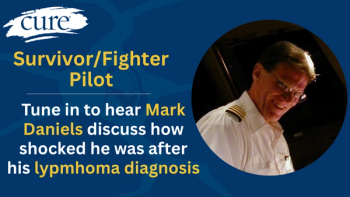
Mark Daniels, an 83-year-old veteran and former fighter pilot, was shocked by his lymphoma diagnosis because he maintained exceptional physical fitness.

After eleven 11 of survivorship, I’ve been waiting to hear the words, “You’re completely free of cancer! Go in peace,” but I’m wondering if it ever will happen.
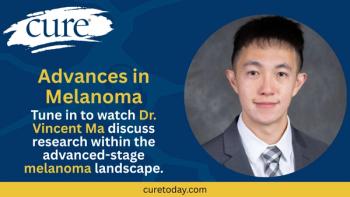
Ongoing research within the advanced-stage melanoma therapeutic space is beginning to suggest that shorter treatment periods may be sufficient for some.
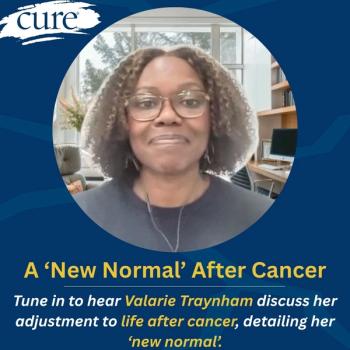
Valarie Traynham sat down for an interview in CURE in which she discussed adjusting to life after cancer, detailing her ‘new normal.’
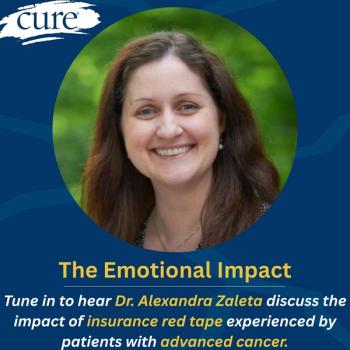
Dr. Alexandra Zaleta discussed the impact of administrative delays and insurance red tape experienced by patients with advanced cancer.

My cancer journey taught me that nothing is certain; however, with support, humor and acceptance, we can weather the ups and downs.

In a phase 2 study, 52% of patients treated with Bria-IMT plus a checkpoint inhibitor for metastatic breast cancer were alive at one year.

Prehabilitation and early screening, including BIS, can ease recovery, reduce side effects and help manage lymphedema after breast cancer treatment.

It took years to understand why my mastectomy site looked different. Knowing I healed correctly for my procedure helped me accept my new normal.

New clinical trials are advancing in hard-to-treat cancers, offering targeted and less toxic options for patients with limited treatment paths.
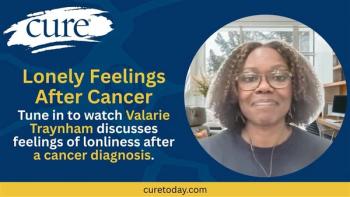
Hearing that you have cancer can lead to dark feelings; however, others have walked this road and come out on the other end, a cancer thriver explained.

I’ve survived rare blood cancer for 15 years, but the lasting side effects have taken a toll — even so, I still find purpose, joy and reasons to keep going.
The FDA approved SIR-Spheres Y-90 resin microspheres for unresectable liver cancer, the only radioembolization approved in the U.S. for both HCC and mCRC.

The FDA granted orphan drug designation to a CAR T-cell therapy for recurrent glioblastoma and high-grade astrocytomas.
Dr. Nicholas James discusses why it is important to identify which patients with high-risk prostate cancer will truly benefit from intensified treatment.
TIL therapy is on the rise in melanoma, with potential for other tumor types.

At 12 years of age, I felt embarrassed by my mother’s cancer, but at 47, I see her as the strongest, most beautiful warrior I’ve ever known.

Cancer is nonpartisan. It touches everyone — cutting across religion, race, ethnicity, sexual orientation and socioeconomic status.

Zac Mirecki reflects on six years of survivorship, sharing how his AML journey taught him to priori-tize self-care, seek connection, and support others through advocacy.

Learning I carried the BRCA1 mutation was terrifying, but it gave me the power to choose prevention, embrace survivorship, and honor my journey with purpose.
Fear is a powerful enemy of the mind but there’s another word that has the same power. That word is a six letter one, cancer.
Multidisciplinary care, a collaborative approach where various healthcare disciplines come together, is essential for treating those with prostate cancer.

A significant development in the treatment of advanced melanoma has recently emerged: tumor-infiltrating lymphocyte (TIL) therapy.

Nine years after my bladder cancer diagnosis, I reflect on its recurrence, caregiving, grief, and my new life with leukemia and renewed gratitude.
The FDA approved Zegfrovy for advanced non-small cell lung cancer with EGFR exon 20 mutations after chemotherapy.

In part 4, the author reflects on her mother’s silent strength and unwavering love during her cancer journey, as she cared for her daughter while silently battling her own illness.
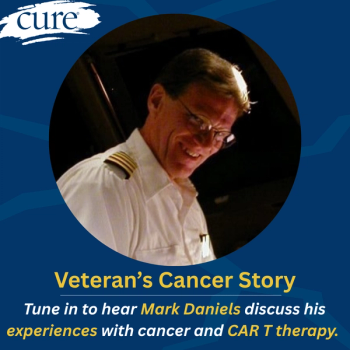
Mark Daniels, 83, says CAR T-cell therapy and strong support helped him overcome lymphoma twice and return to the fitness-focused life he values.

Tamron Little was diagnosed with peritoneal mesothelioma in 2007 as a 21-year-old new mother. Catch up on Tamron's blogs here!

The FDA approved Lynozyfic for relapsed multiple myeloma, but serious risks require restricted use under a special safety program.