





ASCO 2026 will highlight biomarker-driven lung cancer care, targeted therapies, ADCs and phase 3 trials shaping precision oncology advances.
ASCO 2026 will highlight biomarker-driven lung cancer care, targeted therapies, ADCs and phase 3 trials shaping precision oncology advances.

Breast cancer survivor Erica Deligne advocates for body autonomy and challenges the medical industry’s default toward breast reconstruction.

A lung and breast cancer survivor shares how genetic history, supporting her daughter and leading a support group helped her keep smiling.
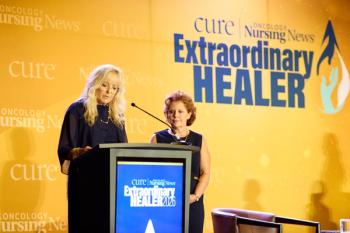
Oncology nurse Tammy Zinn, an Extraordinary Healer finalist, expanded support through wish-granting programs, counseling and survivorship care for patients with cancer.

Oncology nurse Jill Winther was honored for decades of patient advocacy, education and compassionate support across cancer care settings.
Dr. Erica Mayer of Dana-Farber highlights new data on chemotherapy-free HER2+ treatment, ctDNA monitoring and oral SERDs at ESMO Breast 2026.

A testicular cancer survivor reflects on the importance of Mental Health Awareness Month, finding healing in nature, gratitude and creative renewal.
The FDA approved Enhertu for presurgical HER2+ breast cancer treatment. Dr. Shanu Modi discusses the "win-win" for patient efficacy and safety.
Zynyz plus chemotherapy improved overall survival for patients with advanced anal cancer in the phase 3 POD1UM-303/InterAACT-2 trial.

At ONS Congress 2026, Elianna Tobin shared how nurse navigator outreach helped patients feel more prepared before cancer appointments.

AI may improve symptom management, patient education and workflows in cancer care, but nurses remain essential.
Learn the risk factors, symptoms and screening options tied to colorectal cancer as cases continue rising among younger adults.

A survivor shares why advocating for a mammogram past age 75 led to a crucial second diagnosis and why family history means staying vigilant for life.

New research suggests biologic aging and neighborhood-related stress may affect how aerobic exercise influences cognition after breast cancer treatment.

Talking about what matters most with your nurses can improve your care and comfort during intensive treatments like stem cell transplants.
Patients receiving immunotherapy may develop lifelong endocrine adverse effects requiring insulin, hormone therapy and ongoing support.

A moving journey through breast cancer, discovering that vulnerability is courage and a diagnosis doesn't have to define your spirit or faith.

New research shows maintaining physical function and nutrition may help patients with advanced liver cancer stay on treatment longer and live longer.

The FDA approved Enhertu for certain patients with HER2-positive early-stage breast cancer before and after surgery based on DESTINY trial data.

Michele Kranz, discussed how oncology nurse navigators like herself support patients with cancer through education, advocacy and care coordination.
The FDA approved Tecentriq for patients with muscle-invasive bladder cancer who still have detectable signs of tumor DNA in their blood after surgery.

My experience with cancer has affected the way I think about the health of my pets. Whereas the old me was more fatalistic, the survivor in me would go an extra mile to save a beloved creature.
New research suggests gut bacteria may play a role in fatigue and pain experienced by melanoma patients receiving immunotherapy.
New research shows that lymphoma survivors often face long-term peripheral neuropathy, which may be more severe than what doctors typically report.
Patients should be mindful of preserving muscle mass while receiving GLP-1 therapy during cancer treatment. Experts discuss body composition, sarcopenia and treatment durability in oncology care.

No one can face fear, pain, uncertainty, and isolation of any type of cancer alone.

Jill Winther earned CURE’s 2026 Extraordinary Healer® Award for her leadership, advocacy and dedication to oncology nursing.

FDA approves oral Inqovi plus Venclexta for newly diagnosed AML in older adults or those with comorbidities, expanding non-intensive options.

Researchers at Moffitt Cancer Center are studying DYV800, a topical cream designed to reduce tumor acidity and help the immune system fight cancer.
FDA grants accelerated approval to Beqalzi (sonrotoclax) for relapsed or refractory mantle cell lymphoma in adults after prior therapies